USD $
Central Sanur, Bali, Indonesia
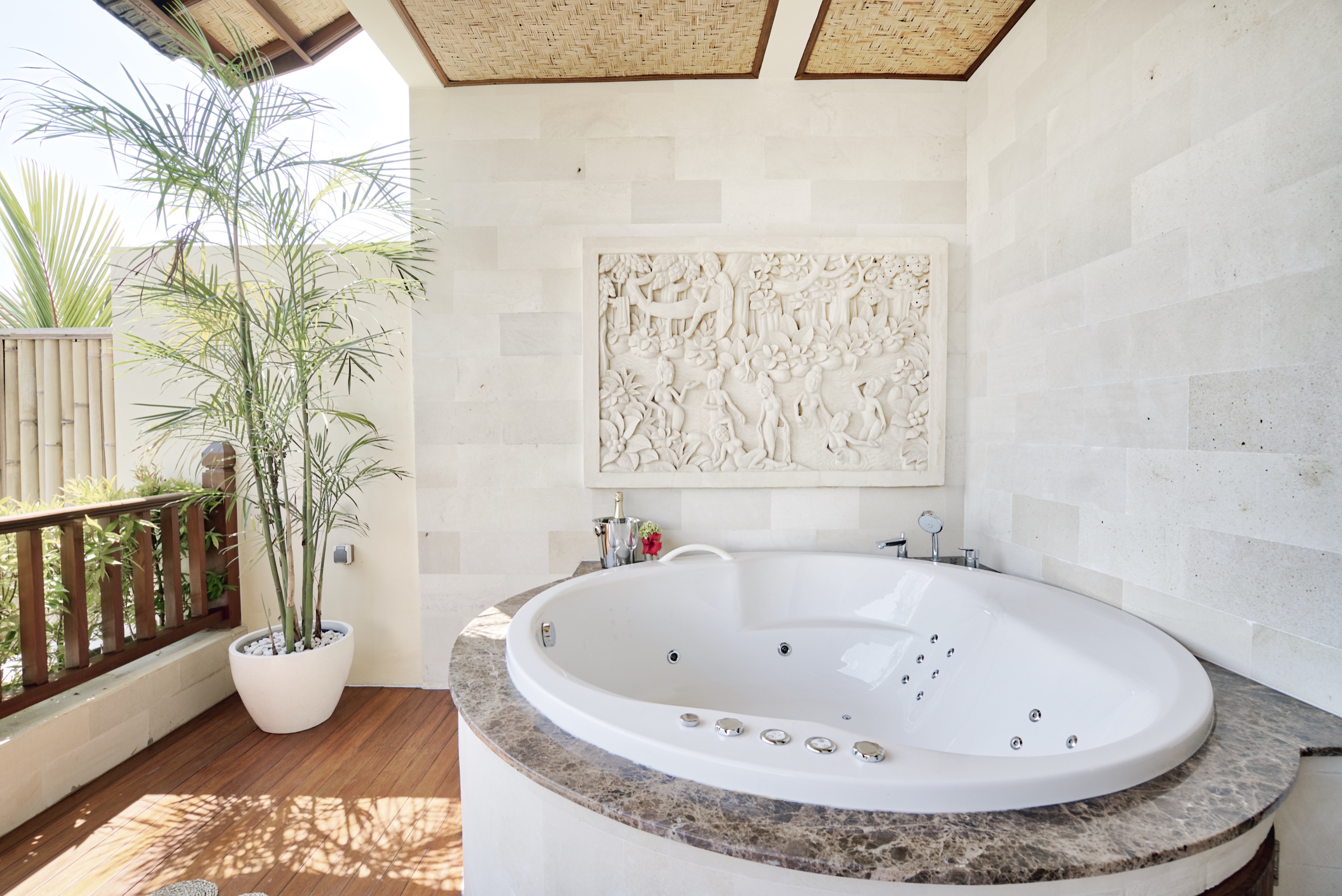
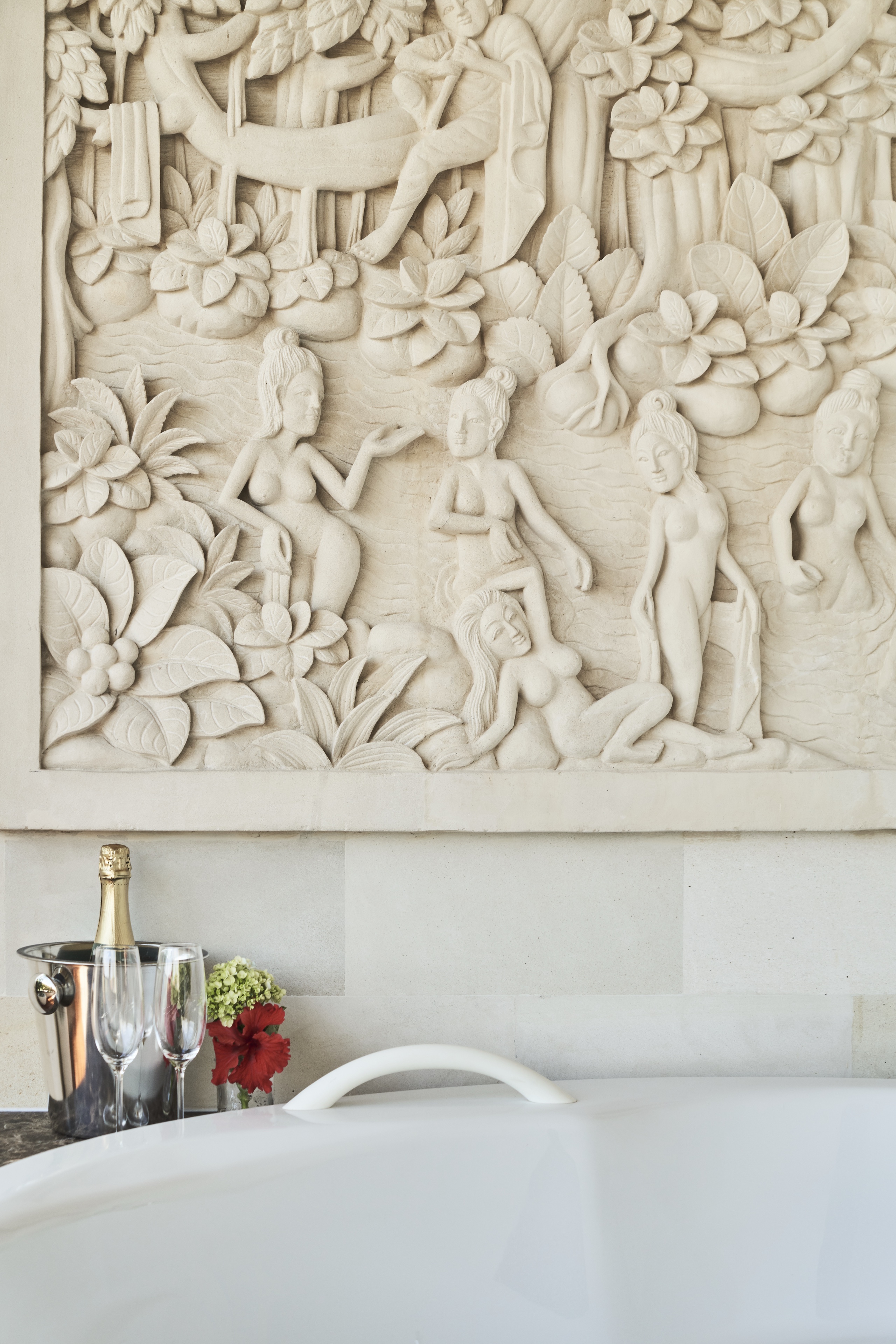
Two bedrooms, and a jacuzzi up on the balcony
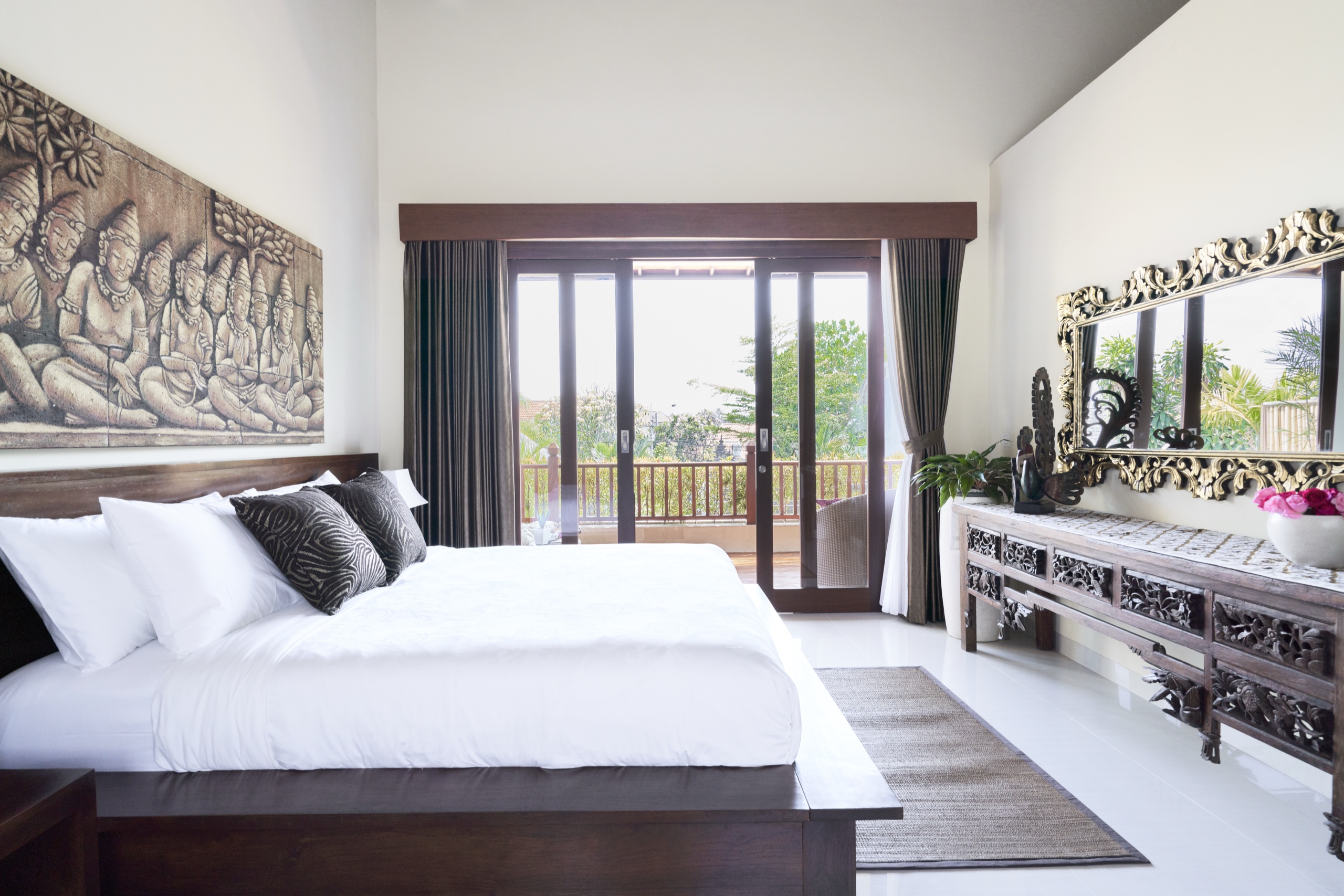
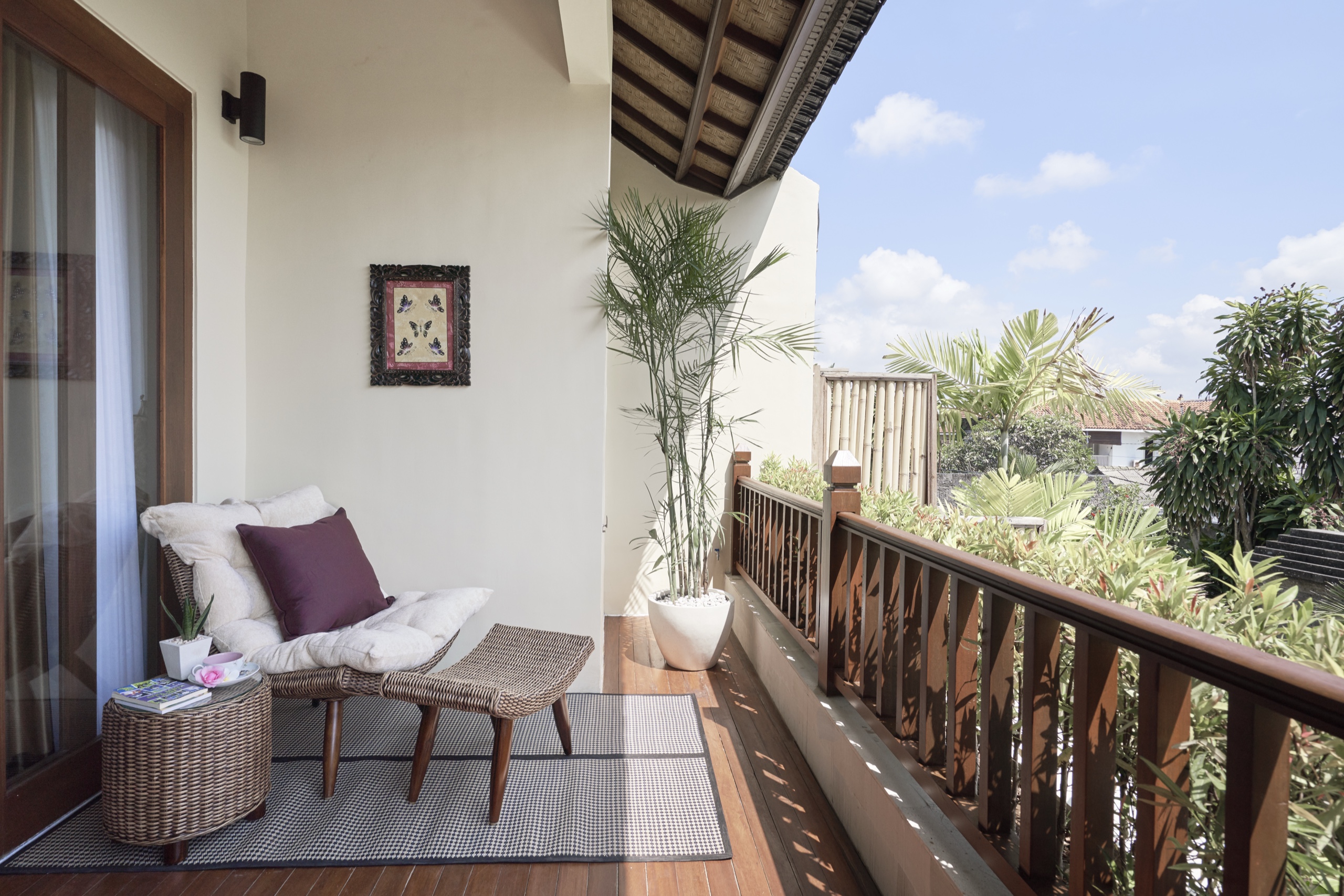
Kecak is a two-bedroom villa with its jacuzzi upstairs, built into the balcony off the master bedroom. It looks north over the rooftops, and on a clear morning Gunung Agung is out there on the horizon.
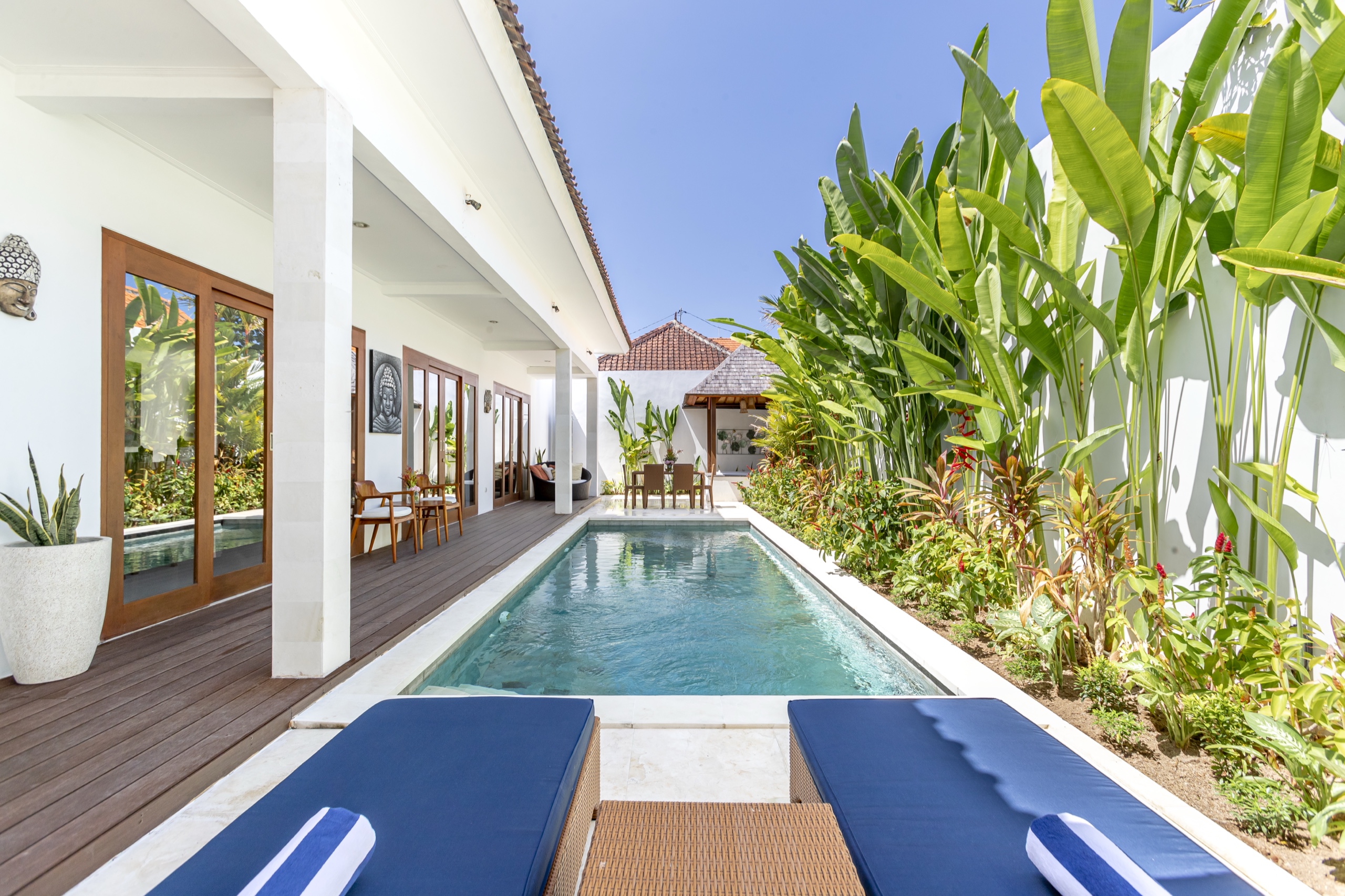
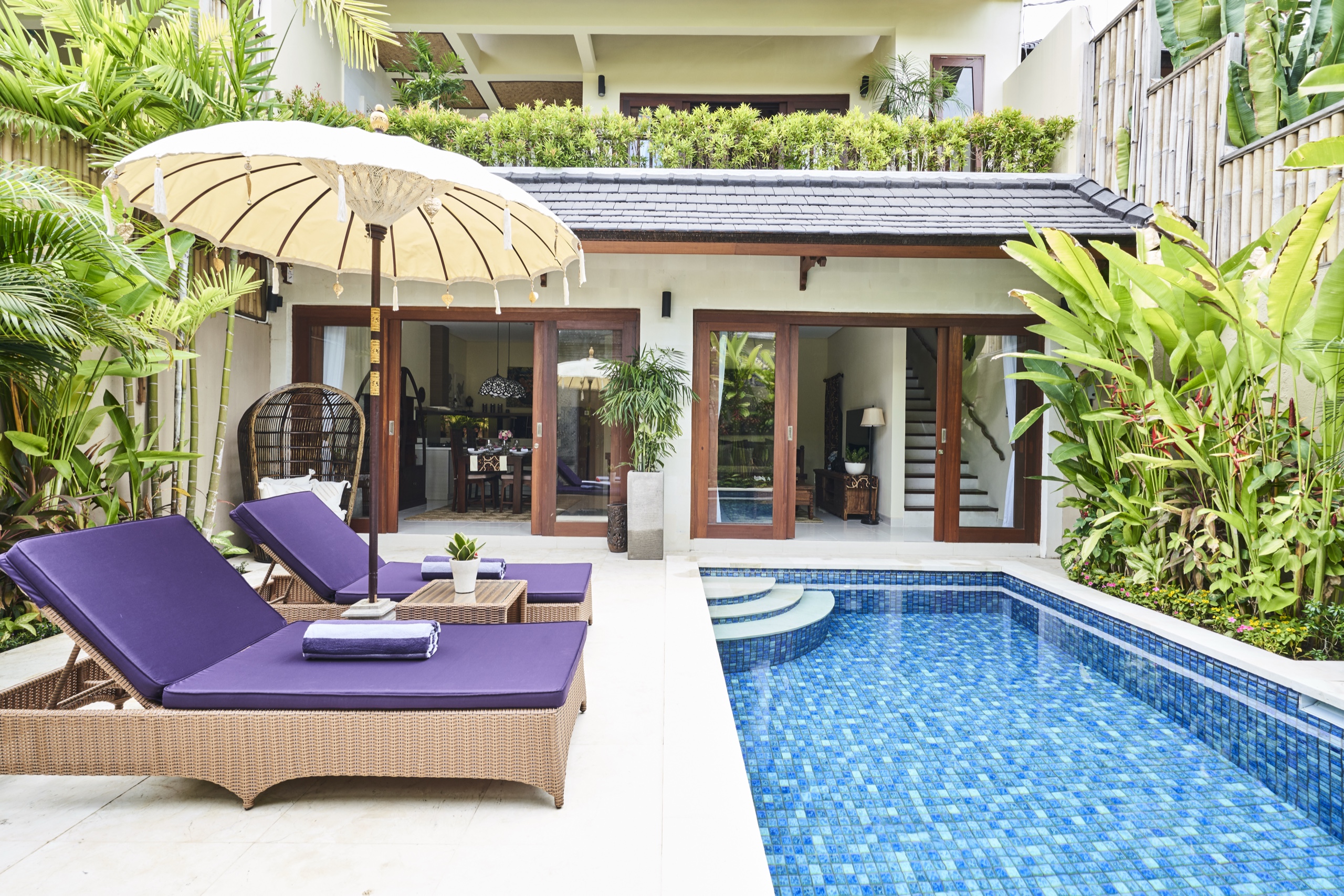
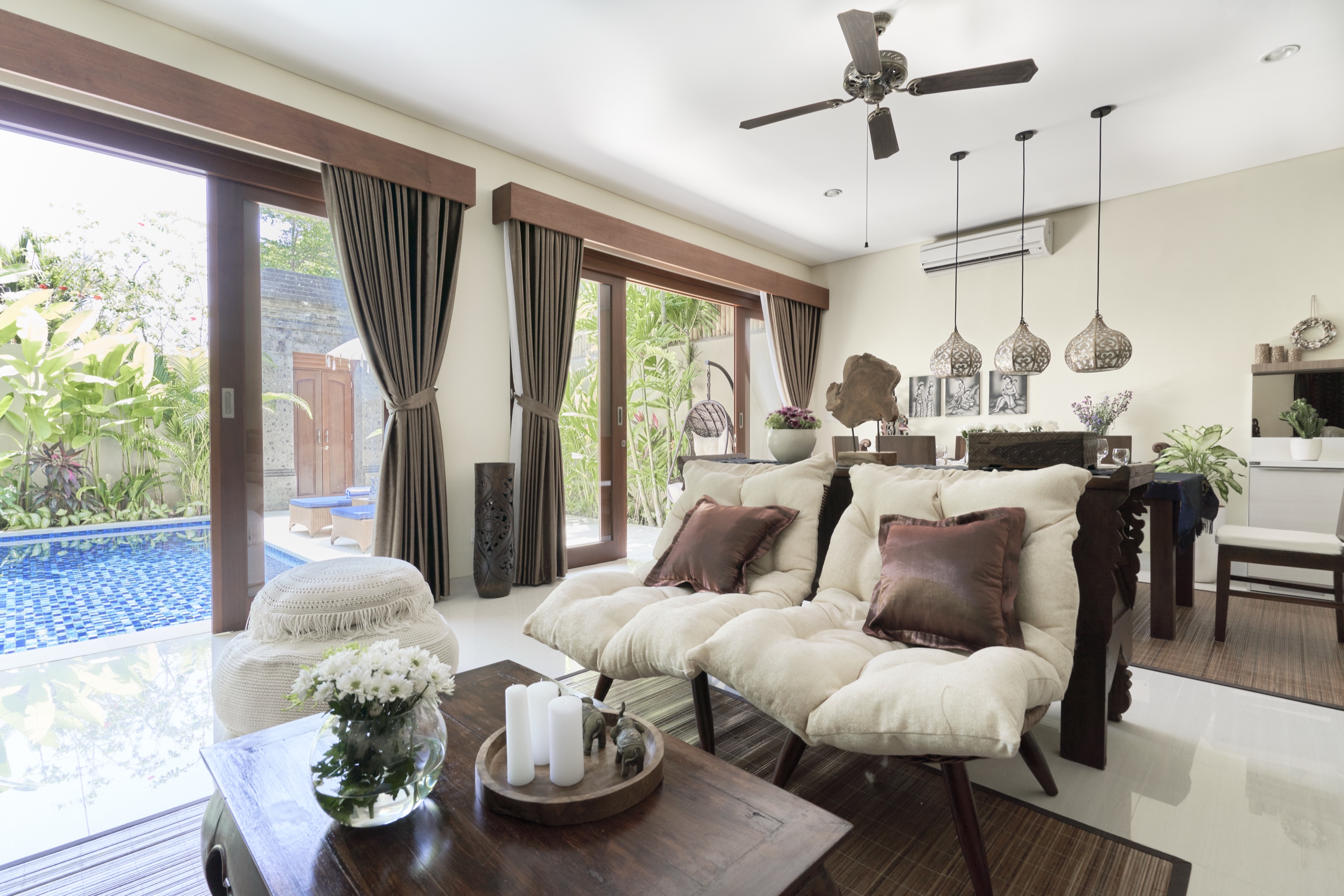
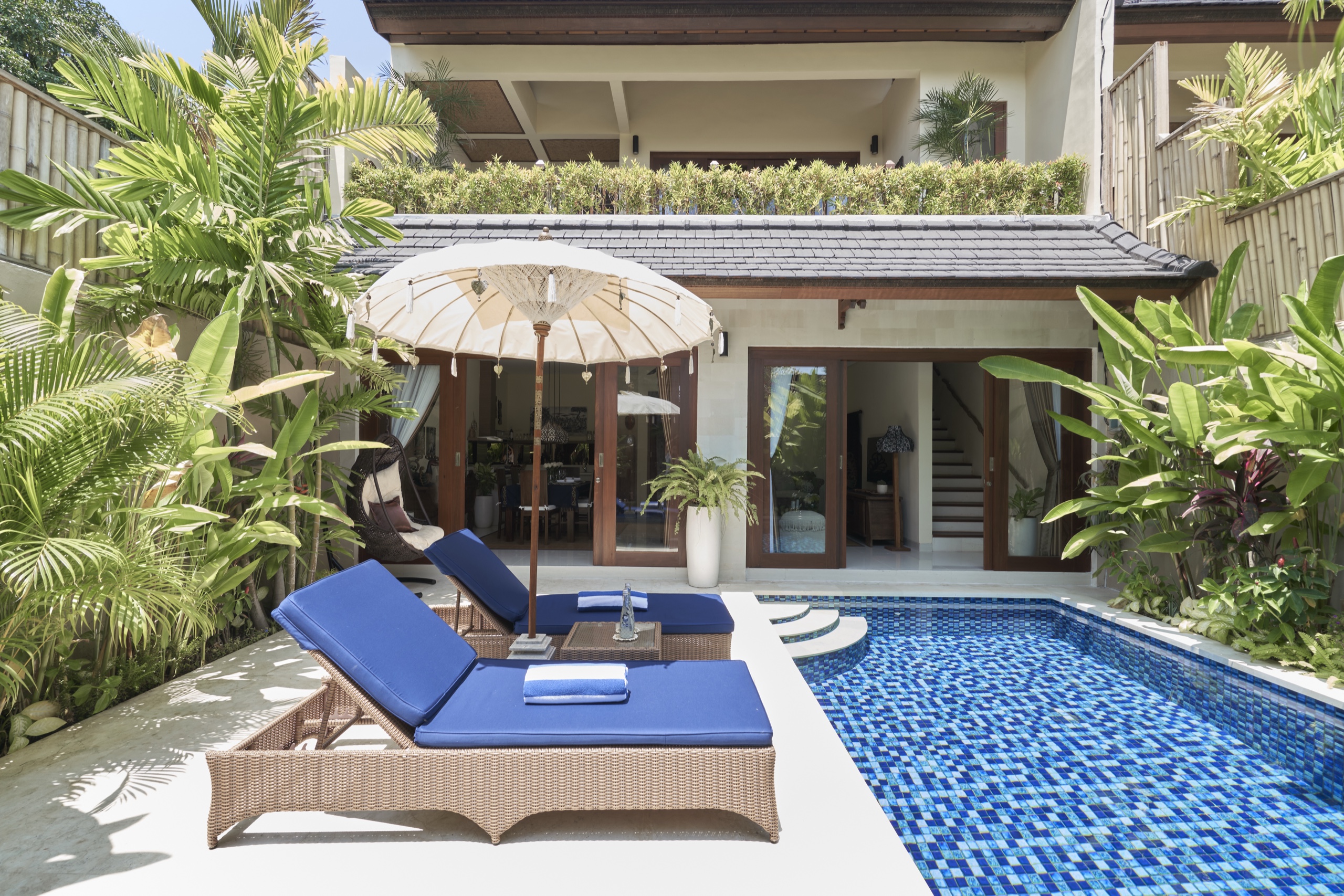
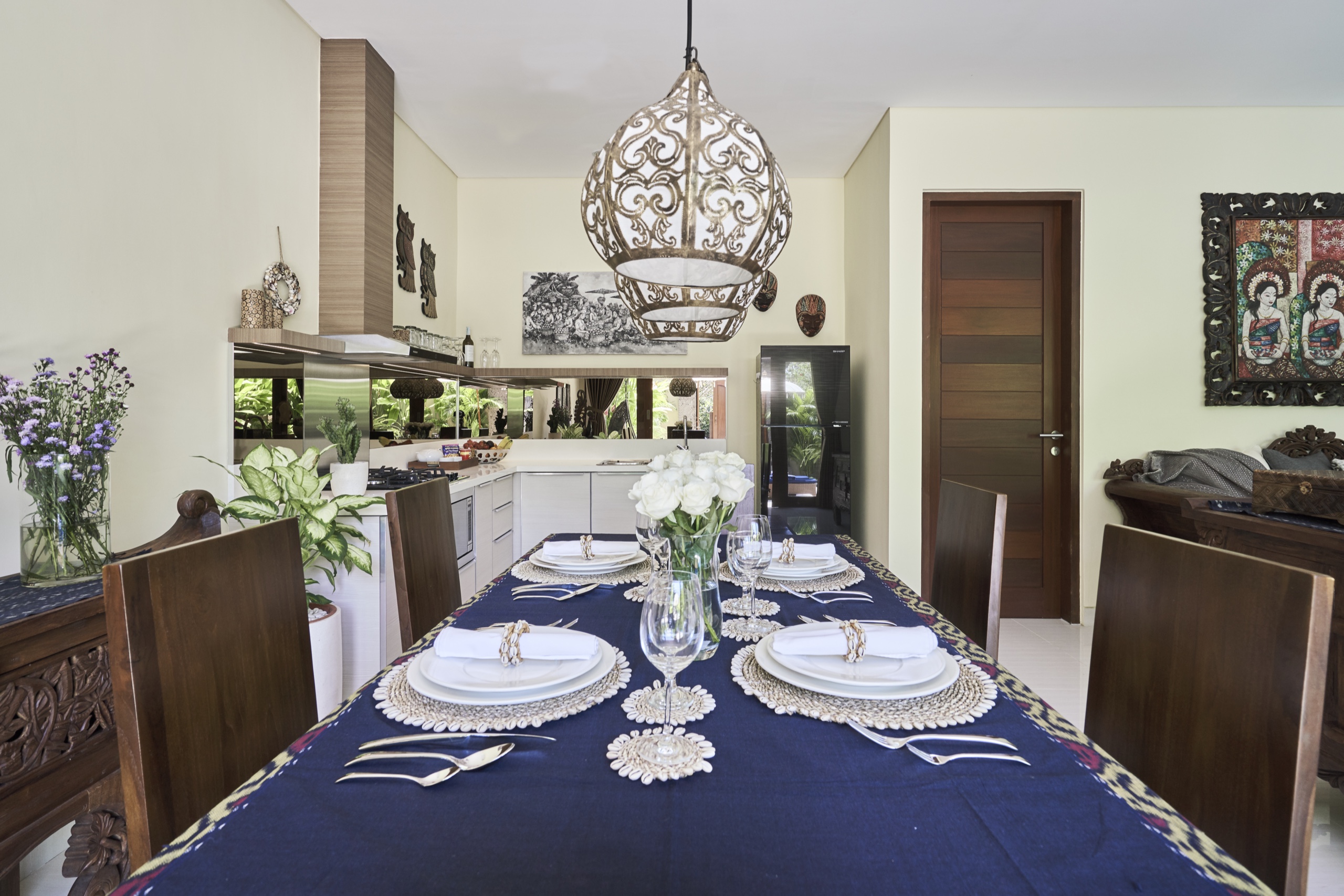
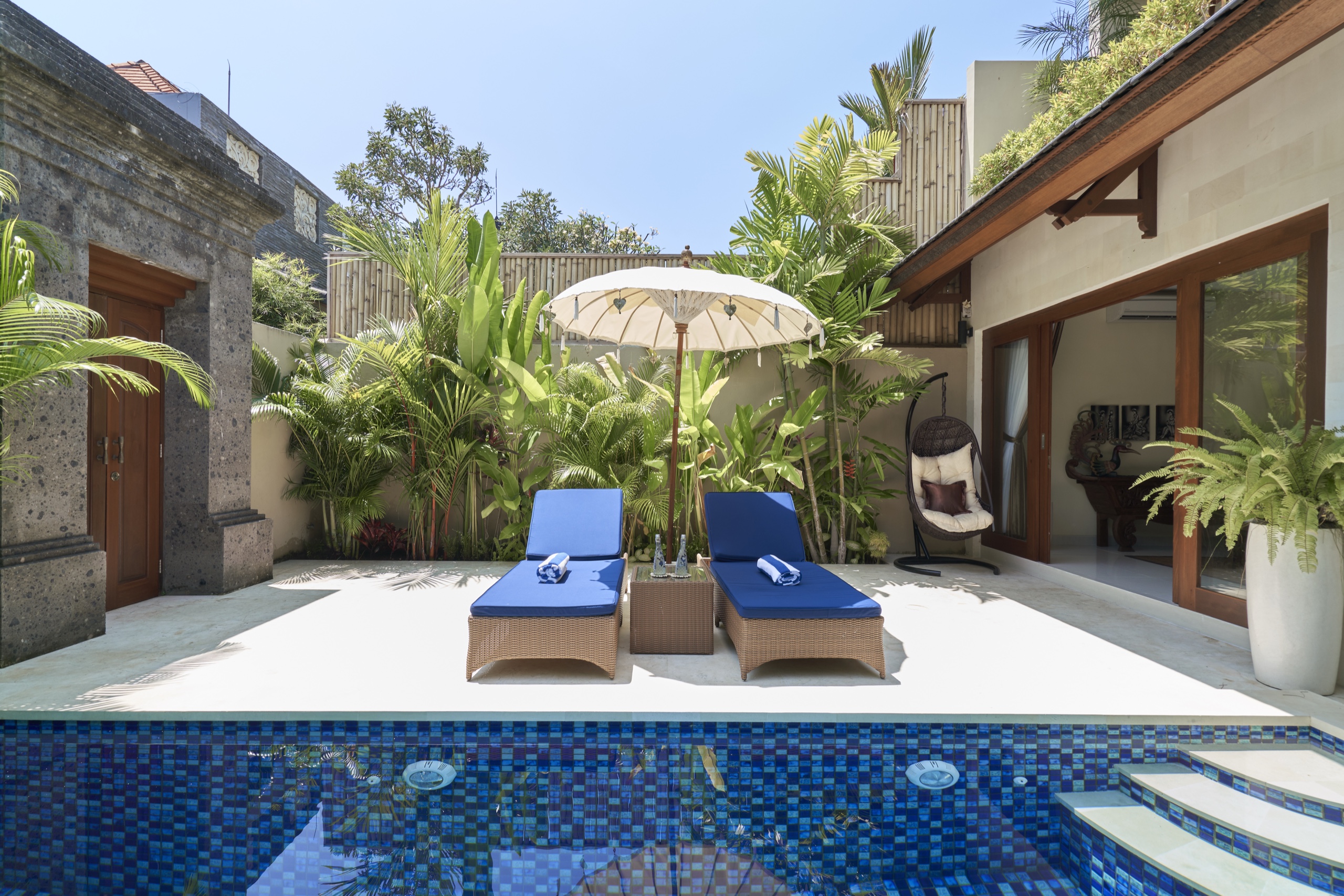
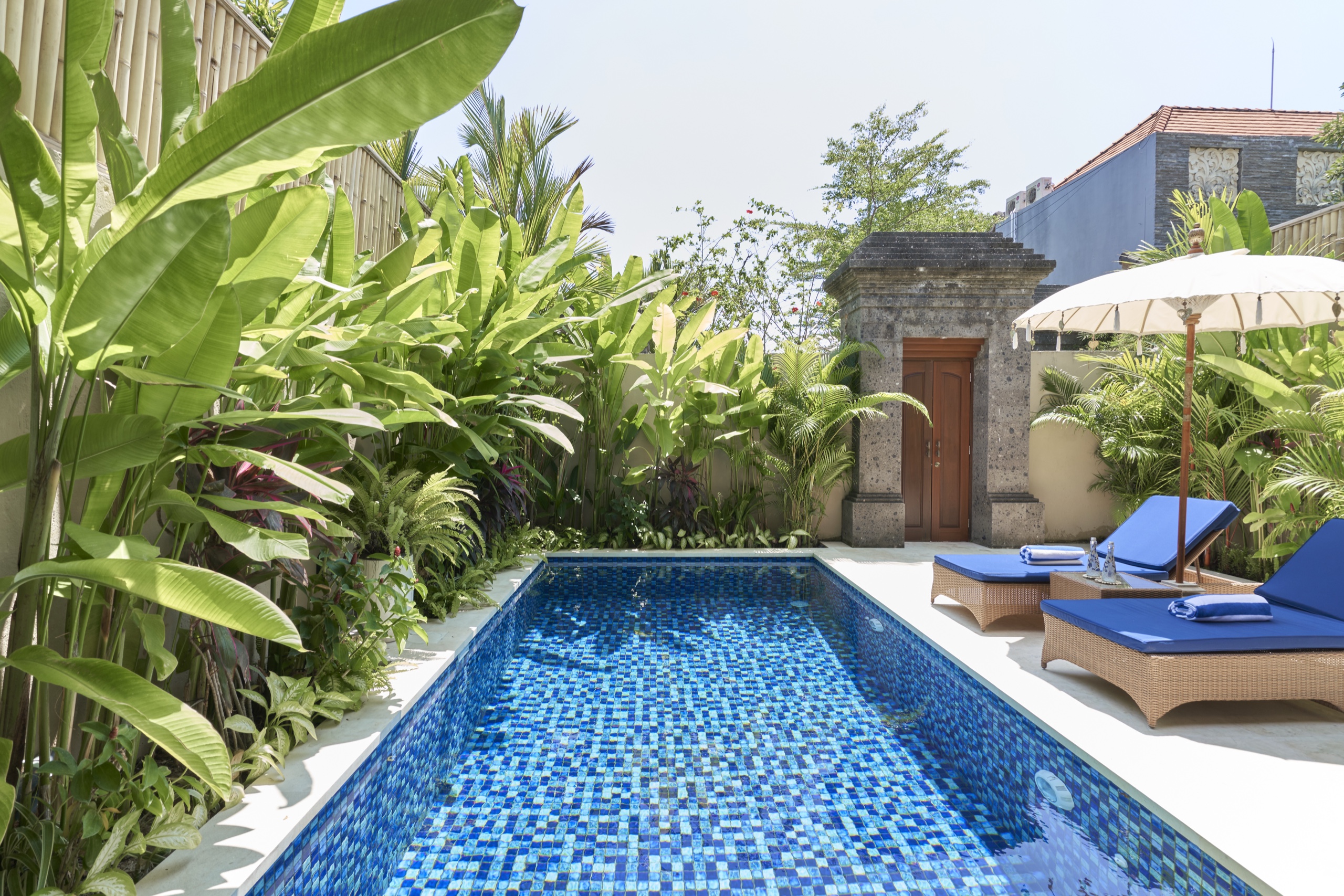
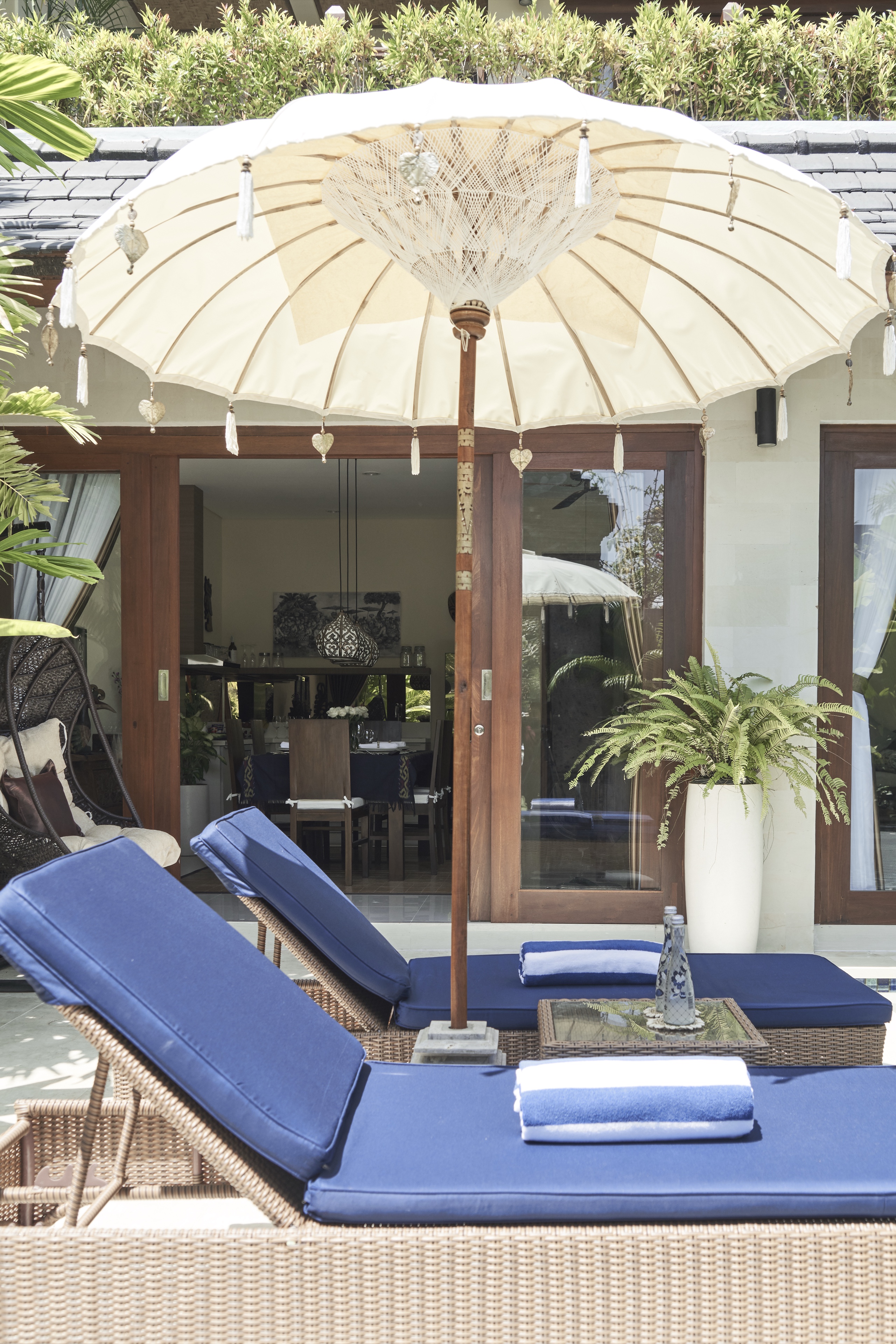
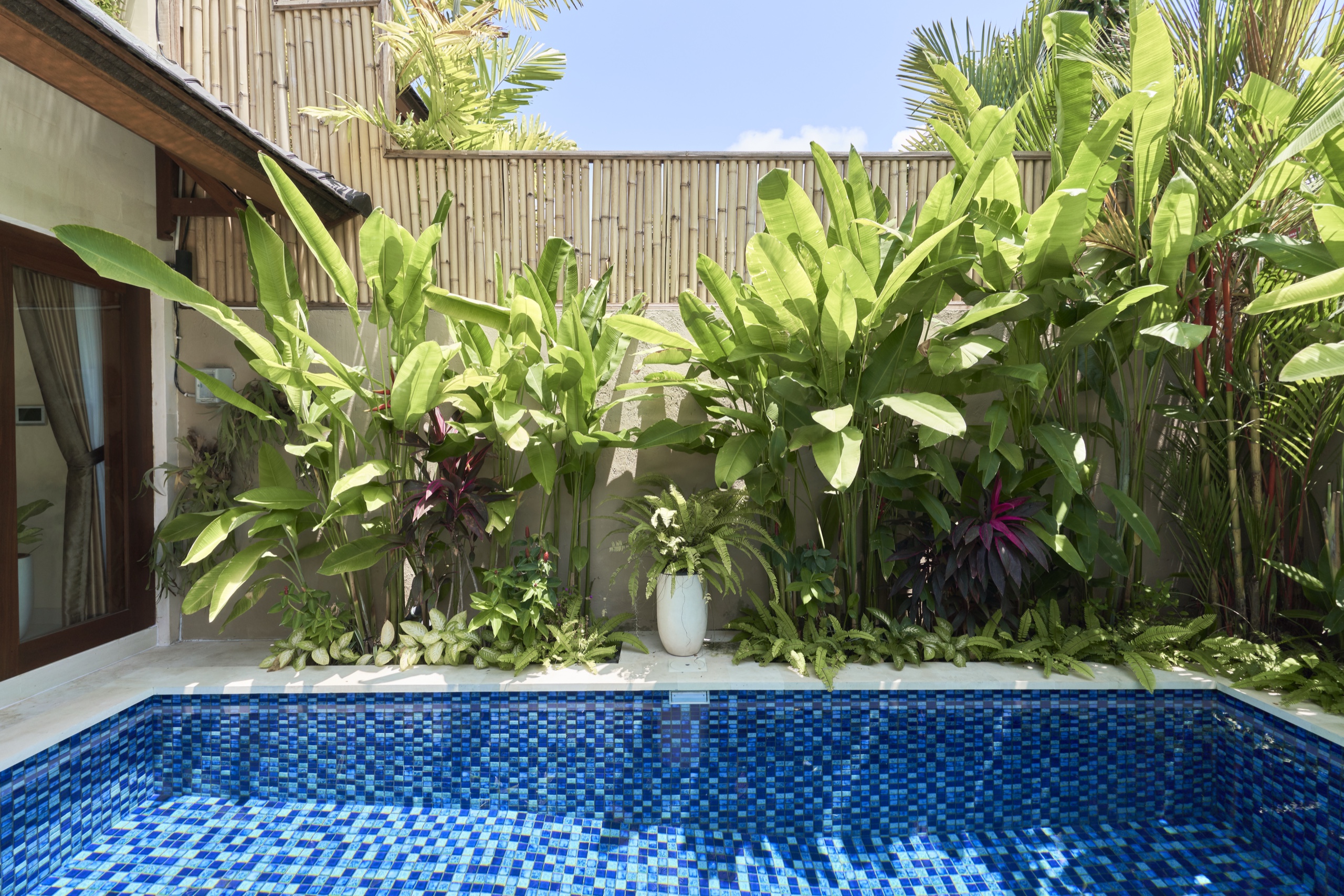
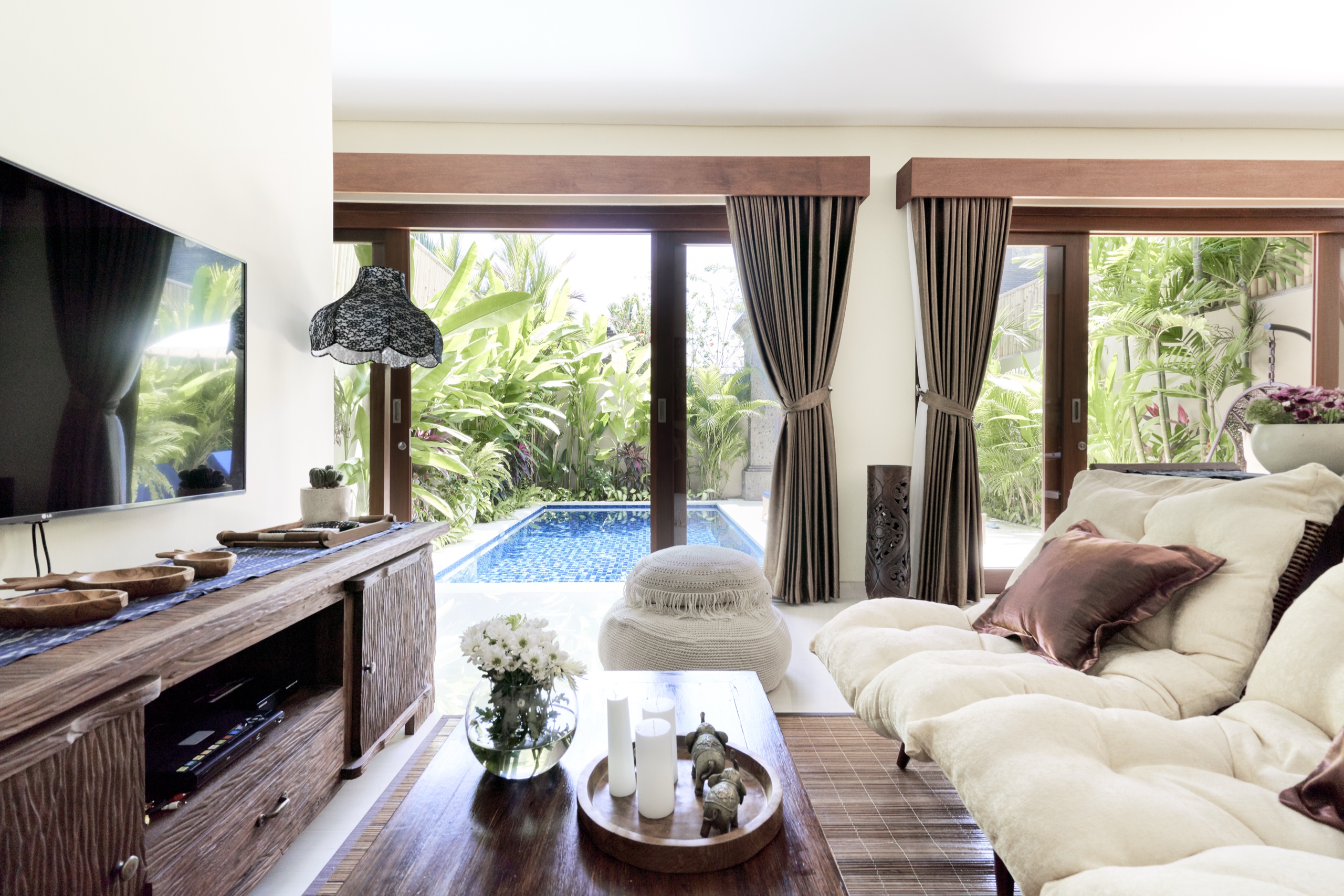
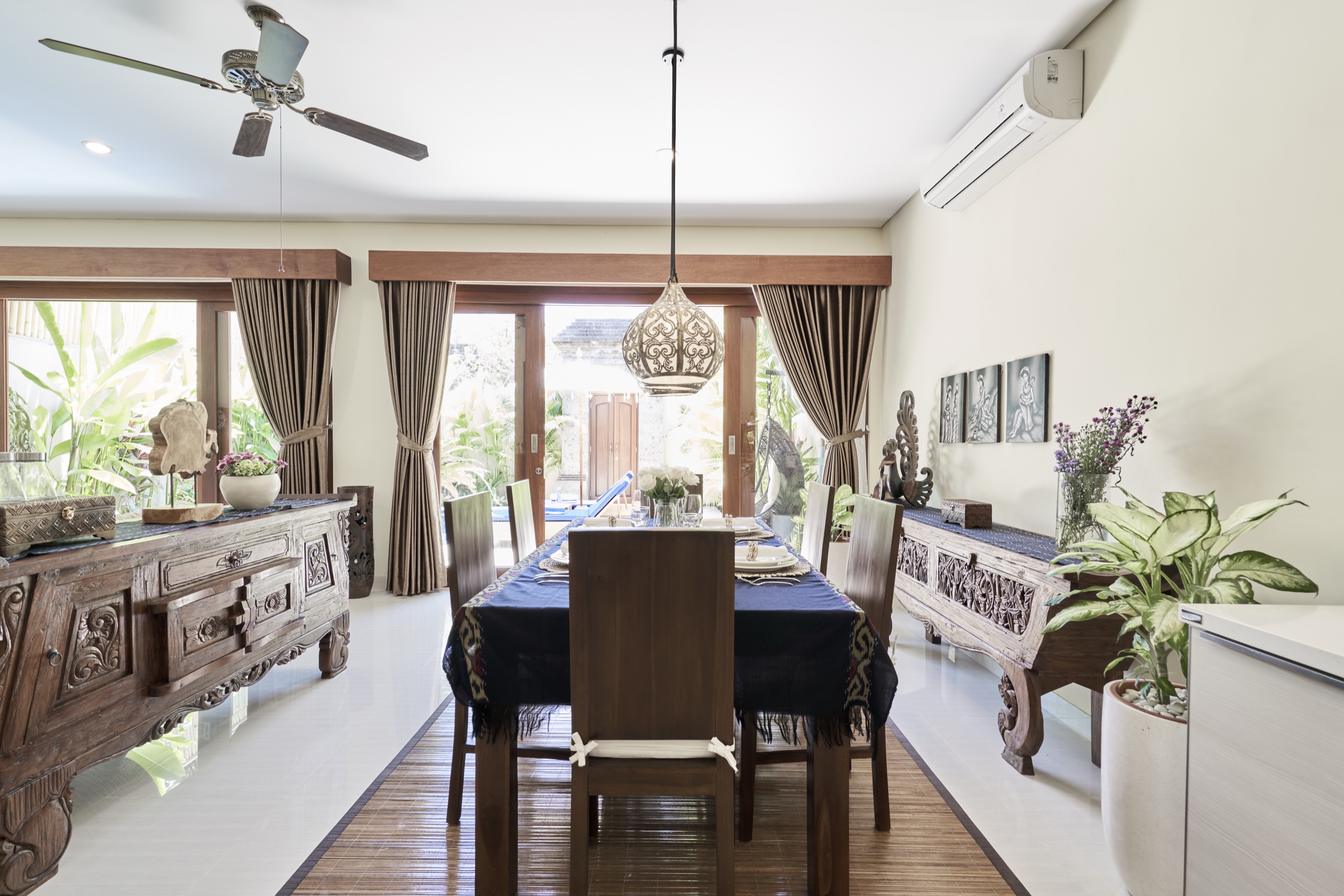
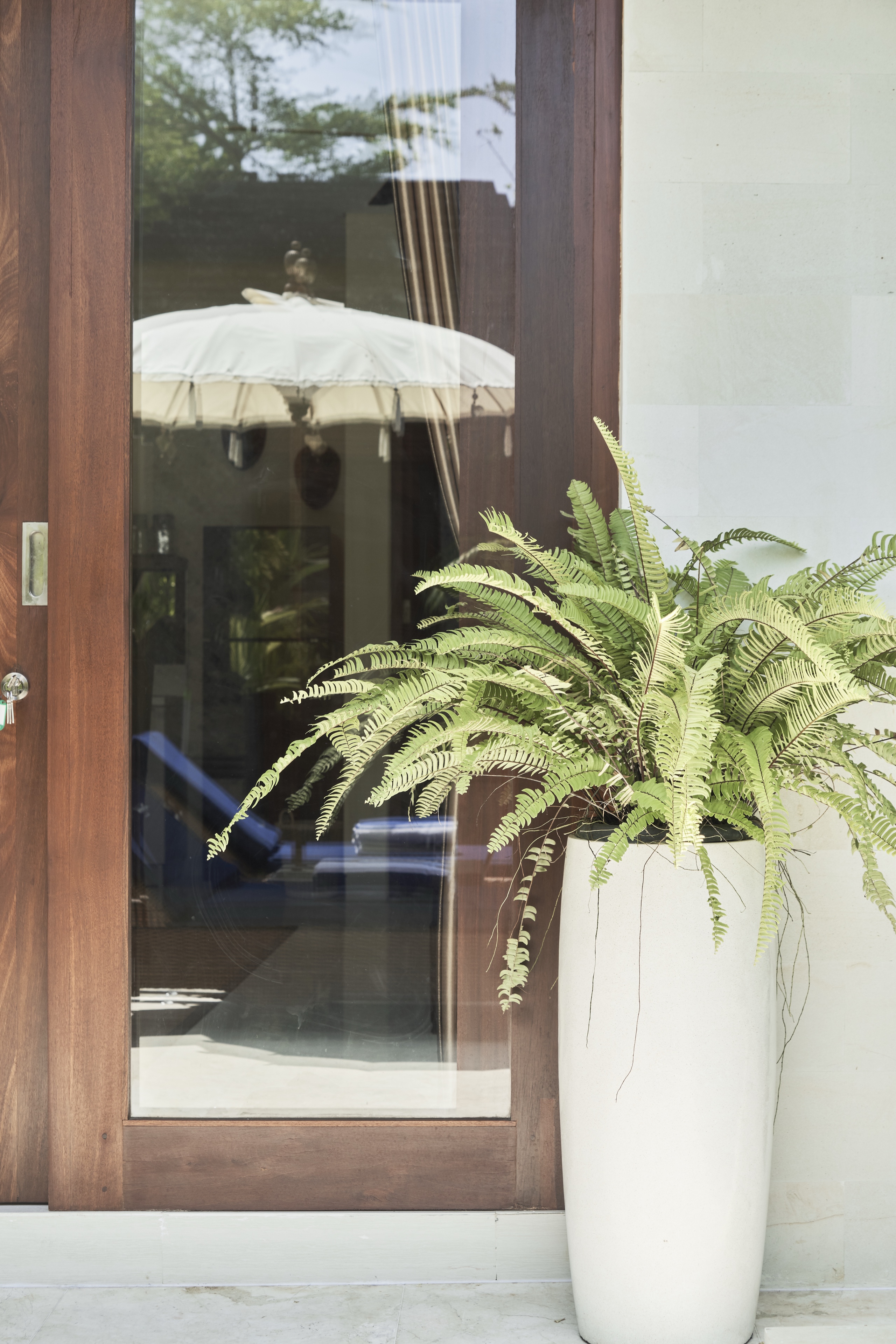
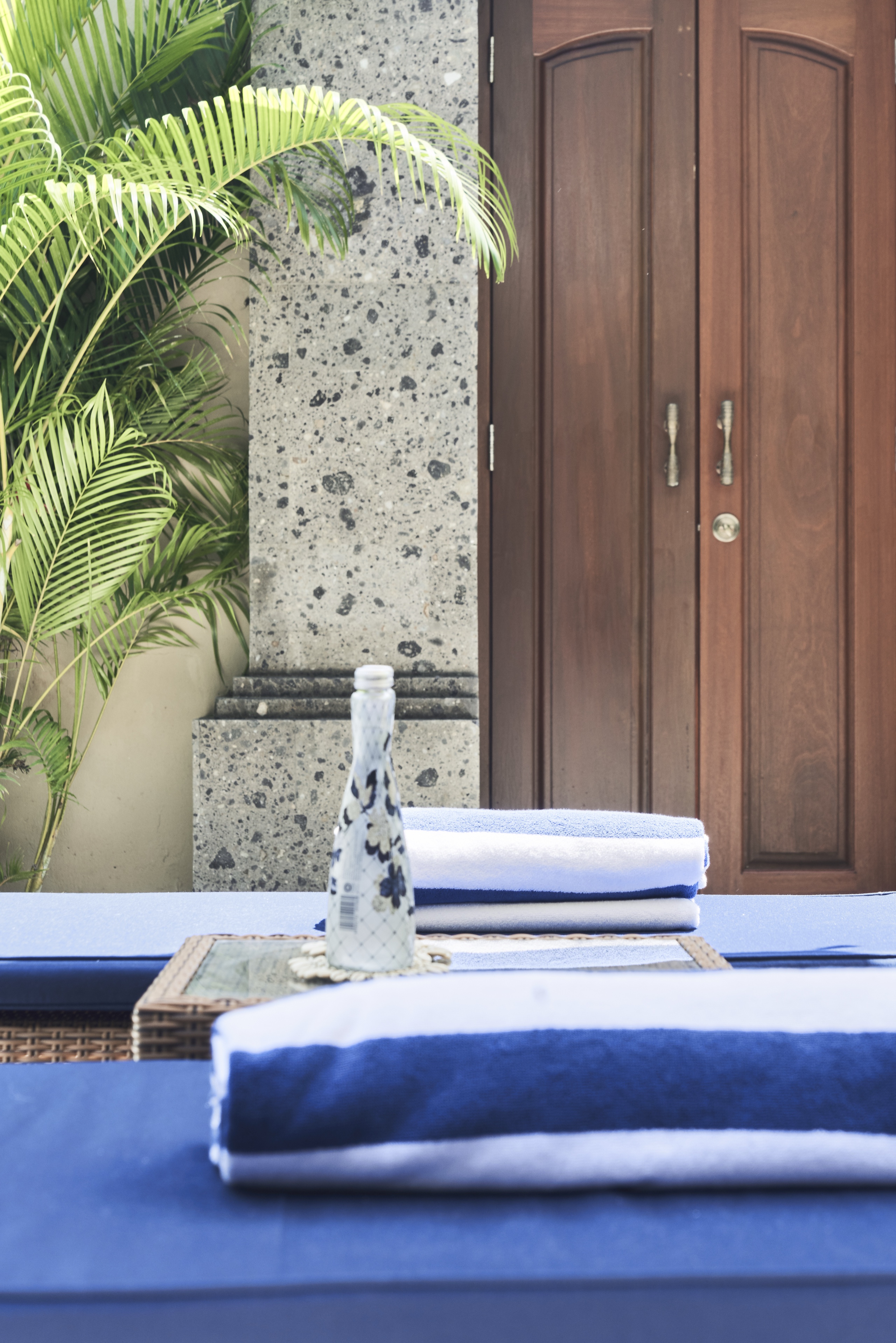
Downstairs the six-metre pool runs in blue mosaic tile along the deck, and the living space opens straight onto it through merbau-framed doors — so the pool is part of the room rather than a view from it.
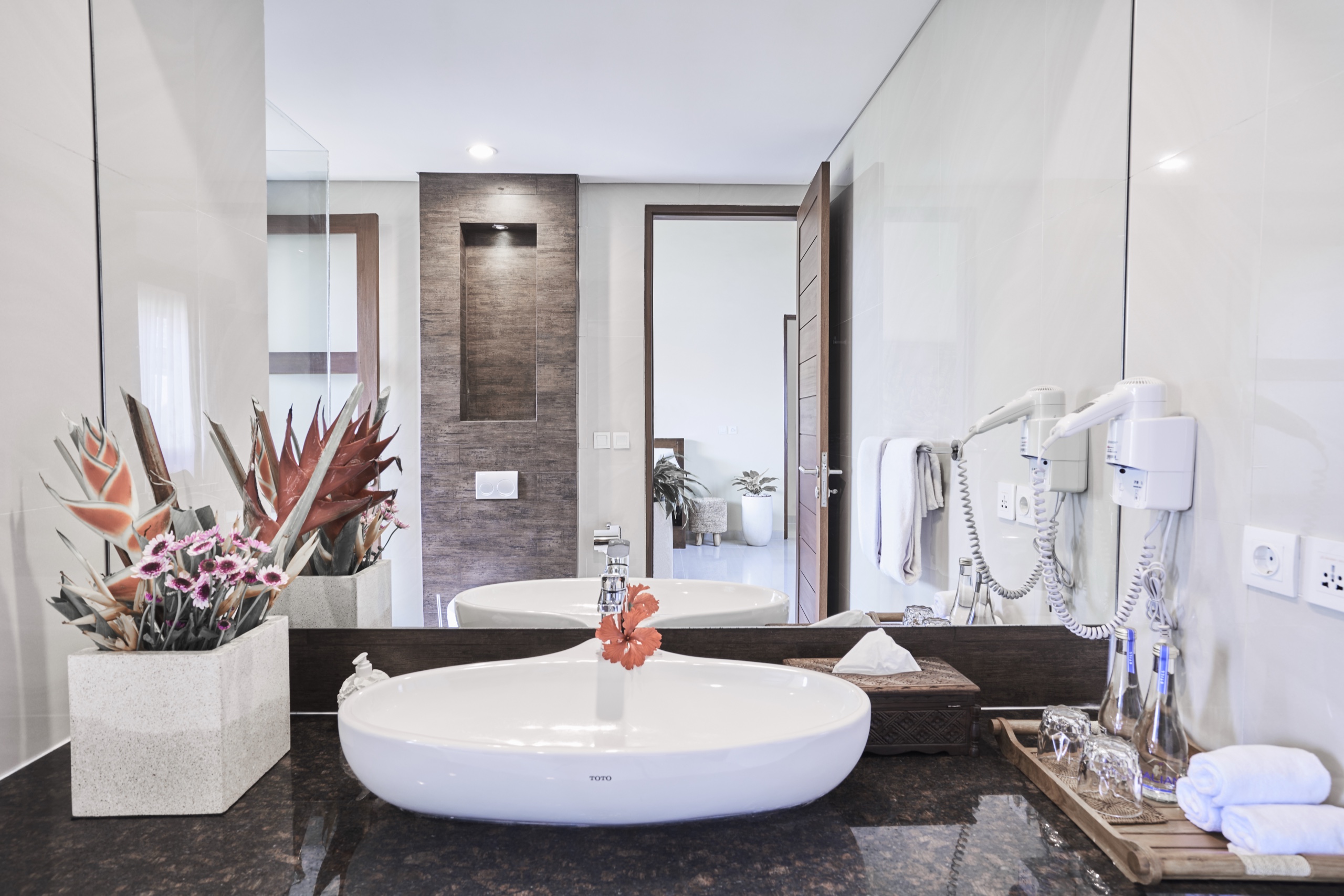
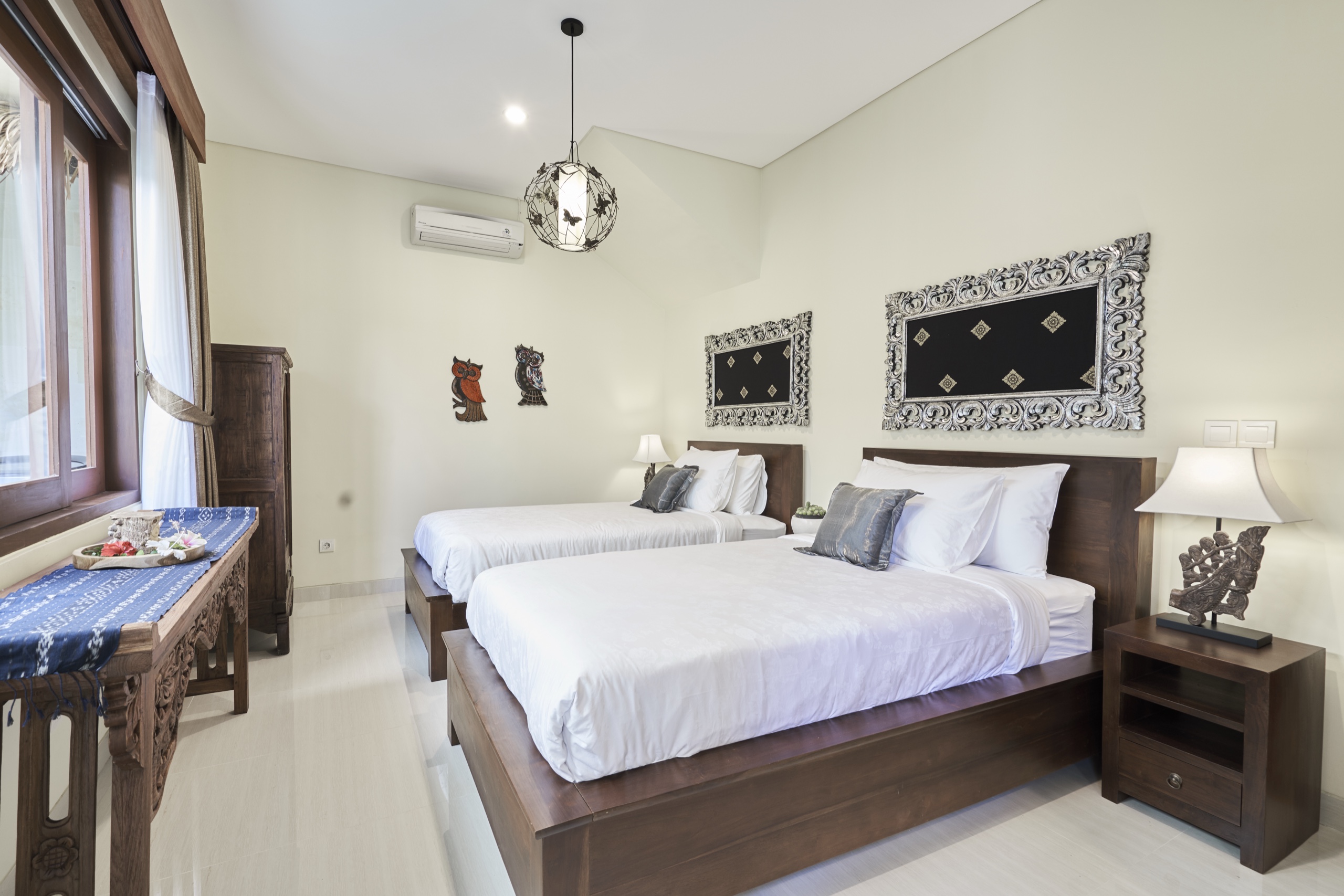
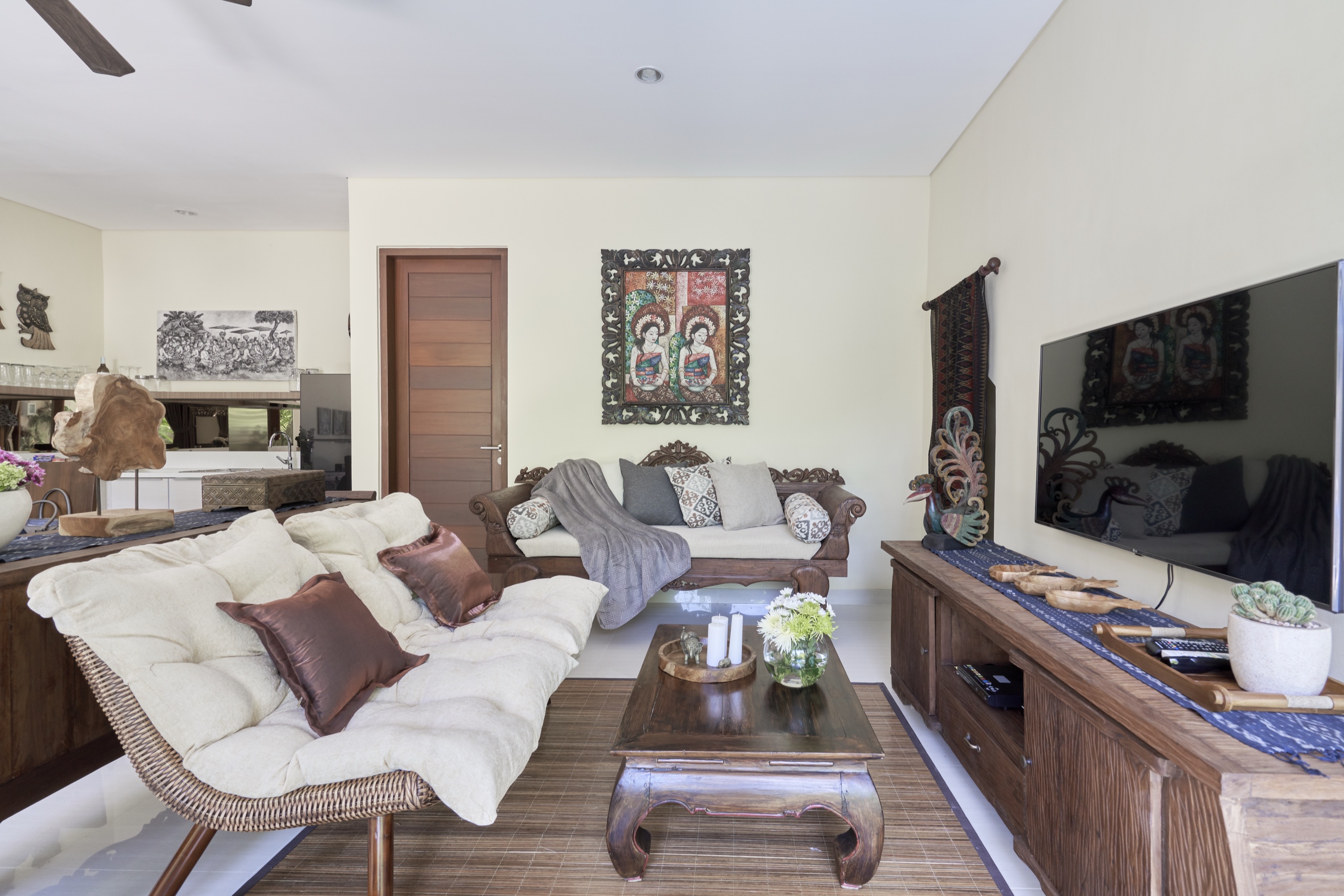
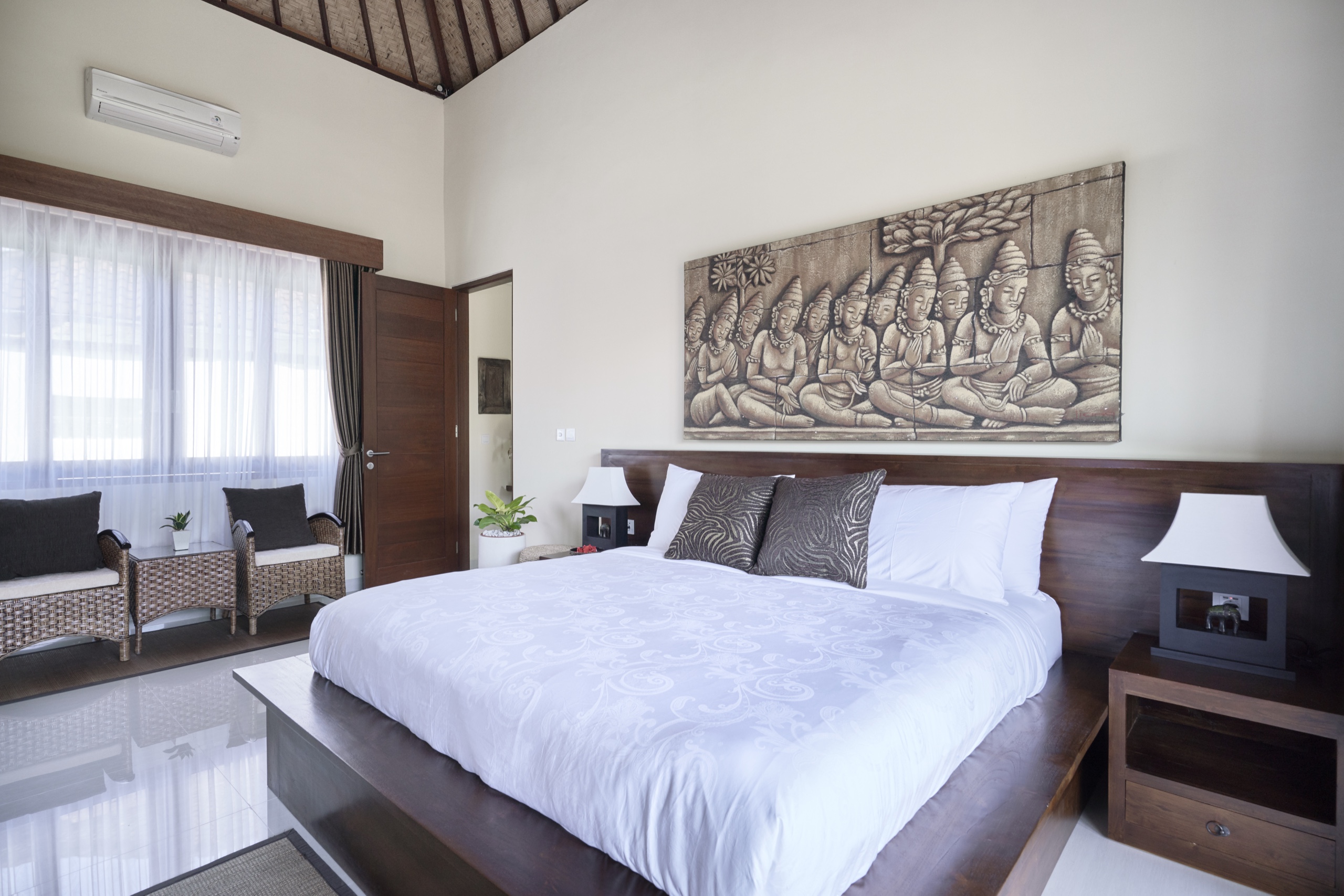
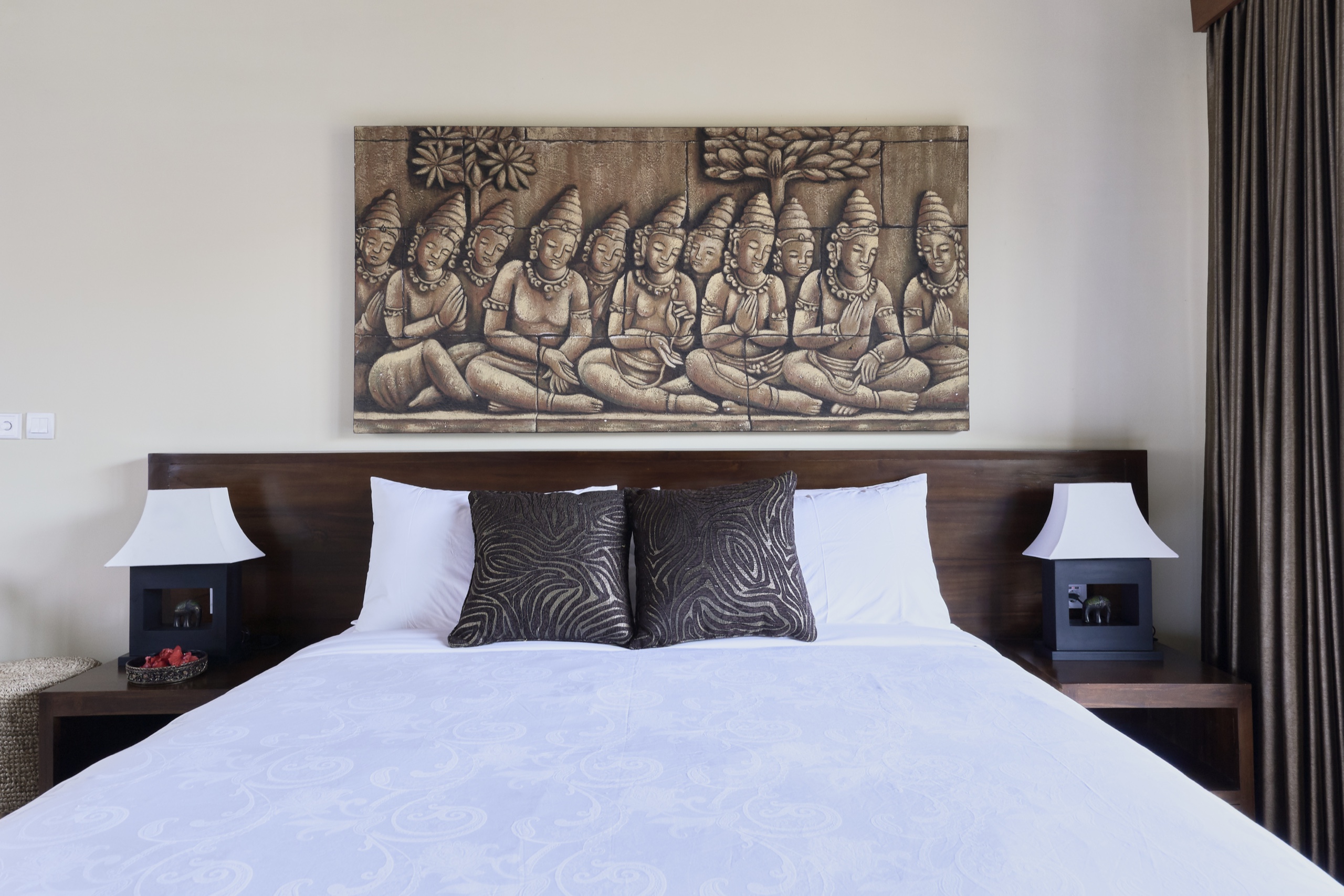
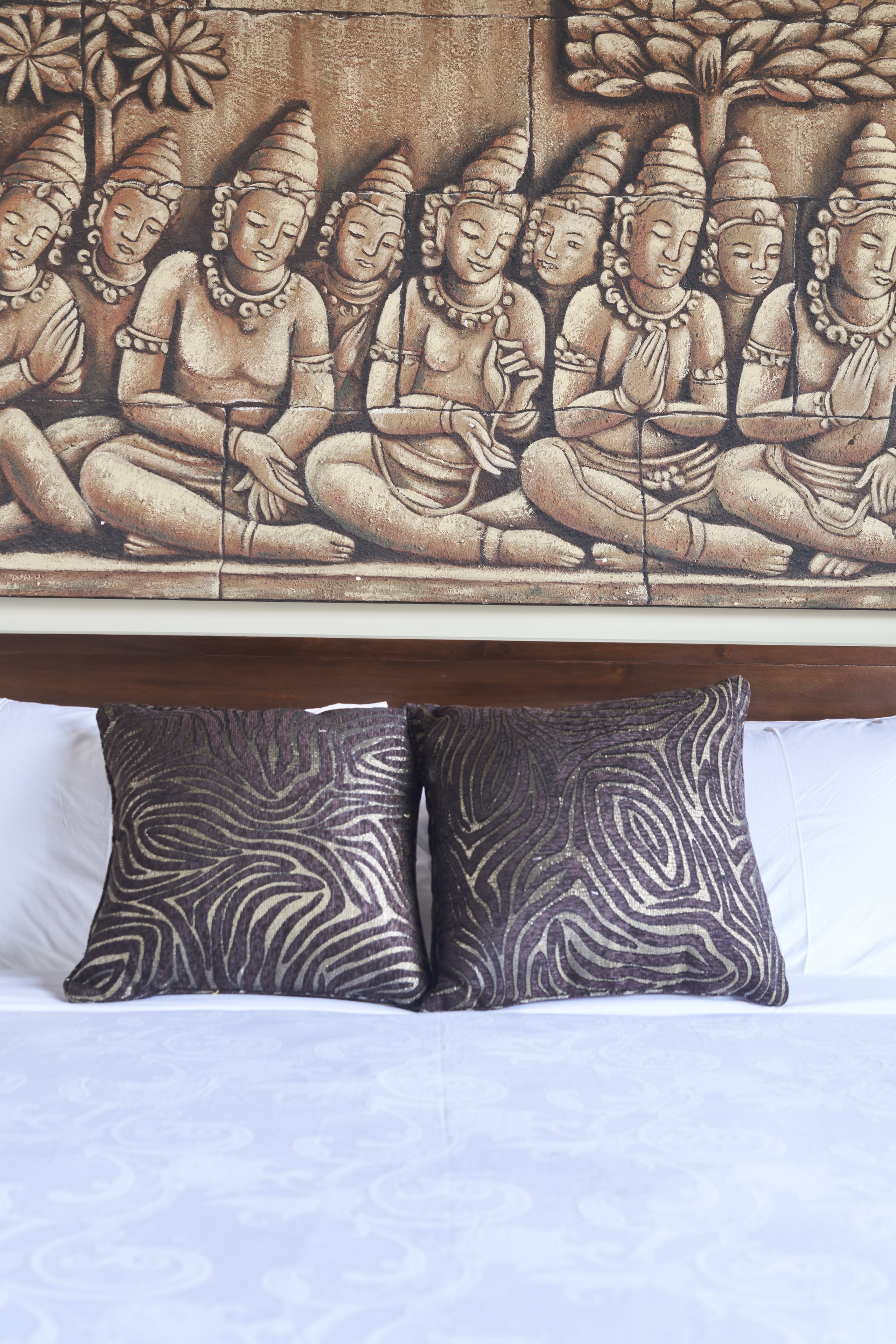
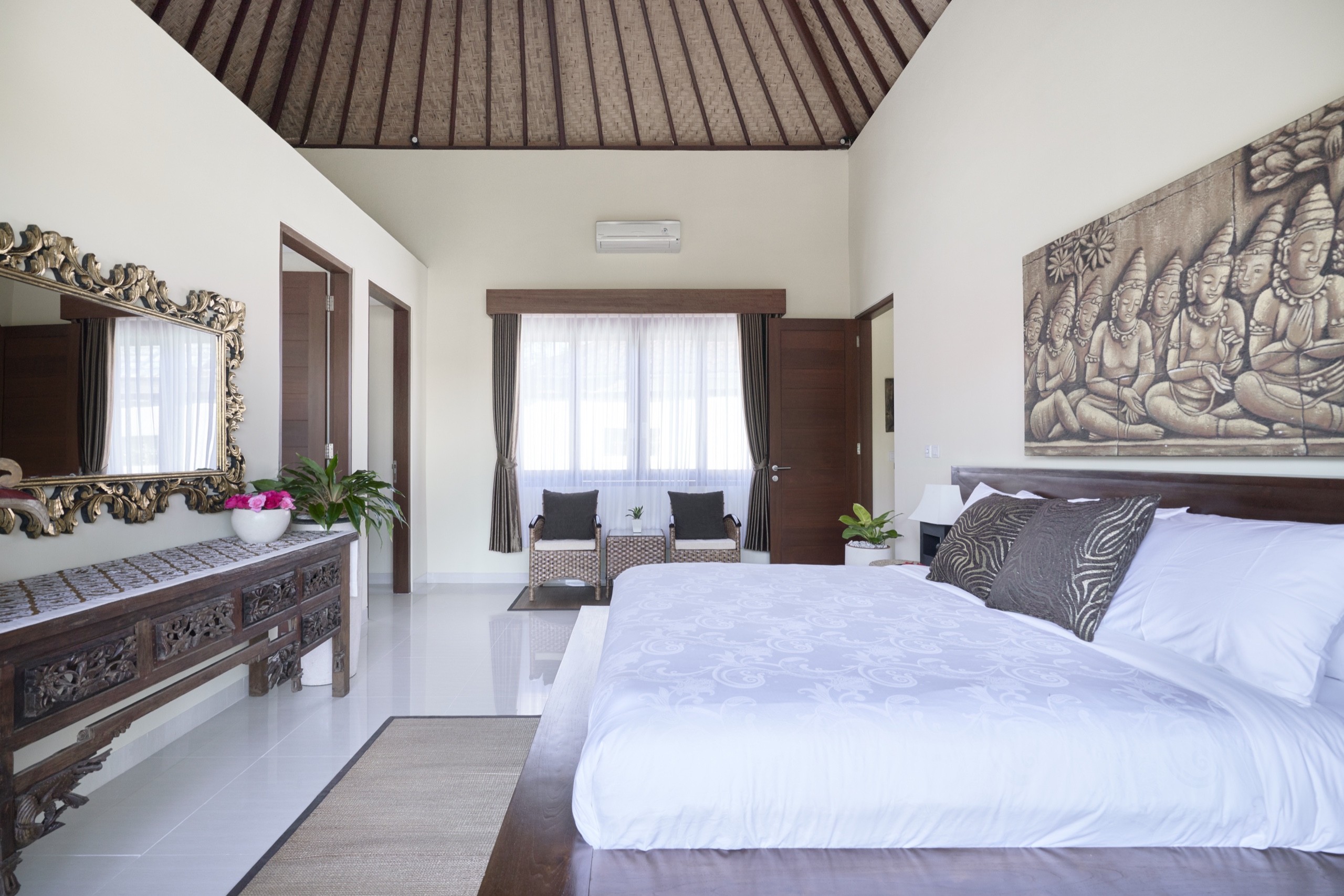
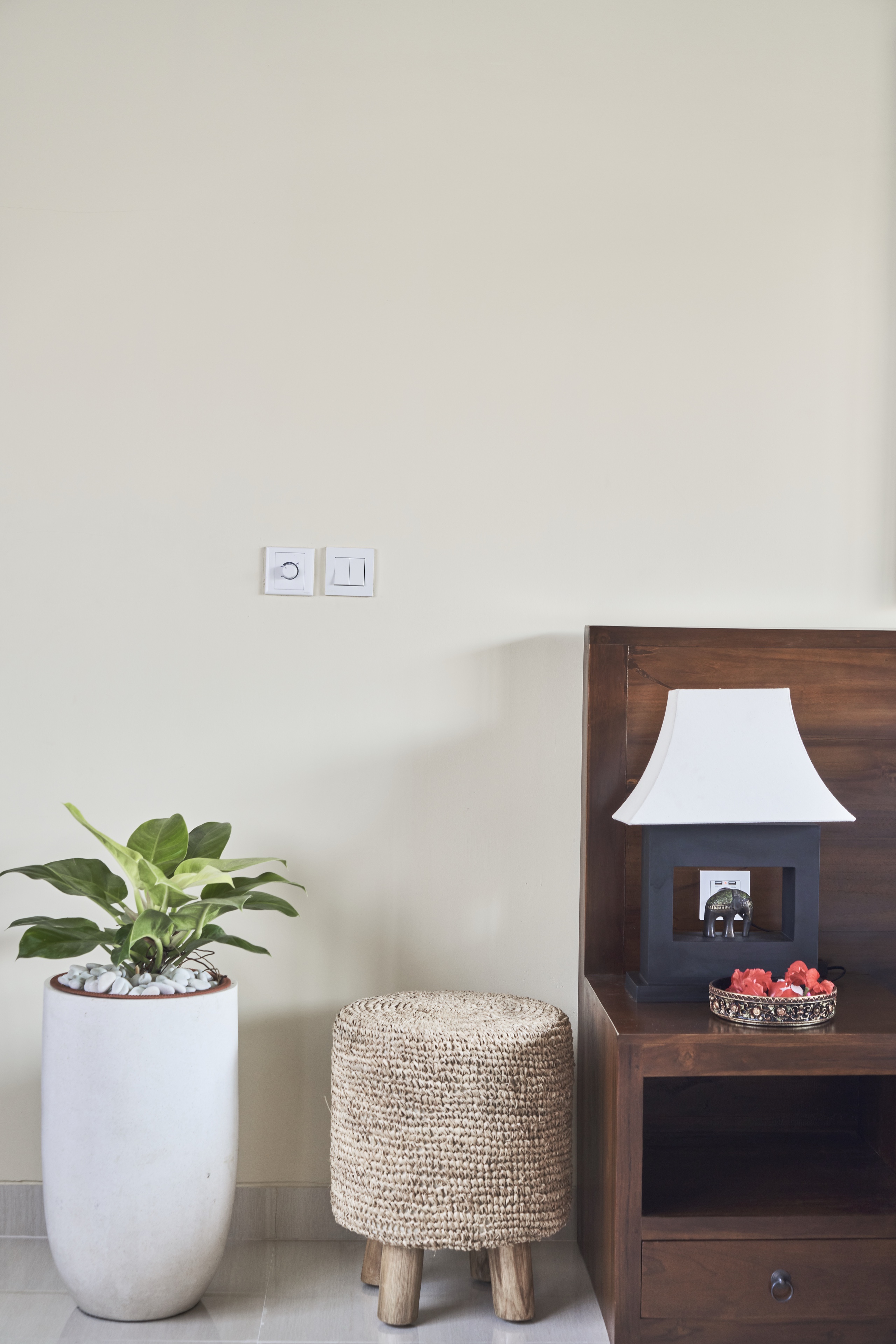
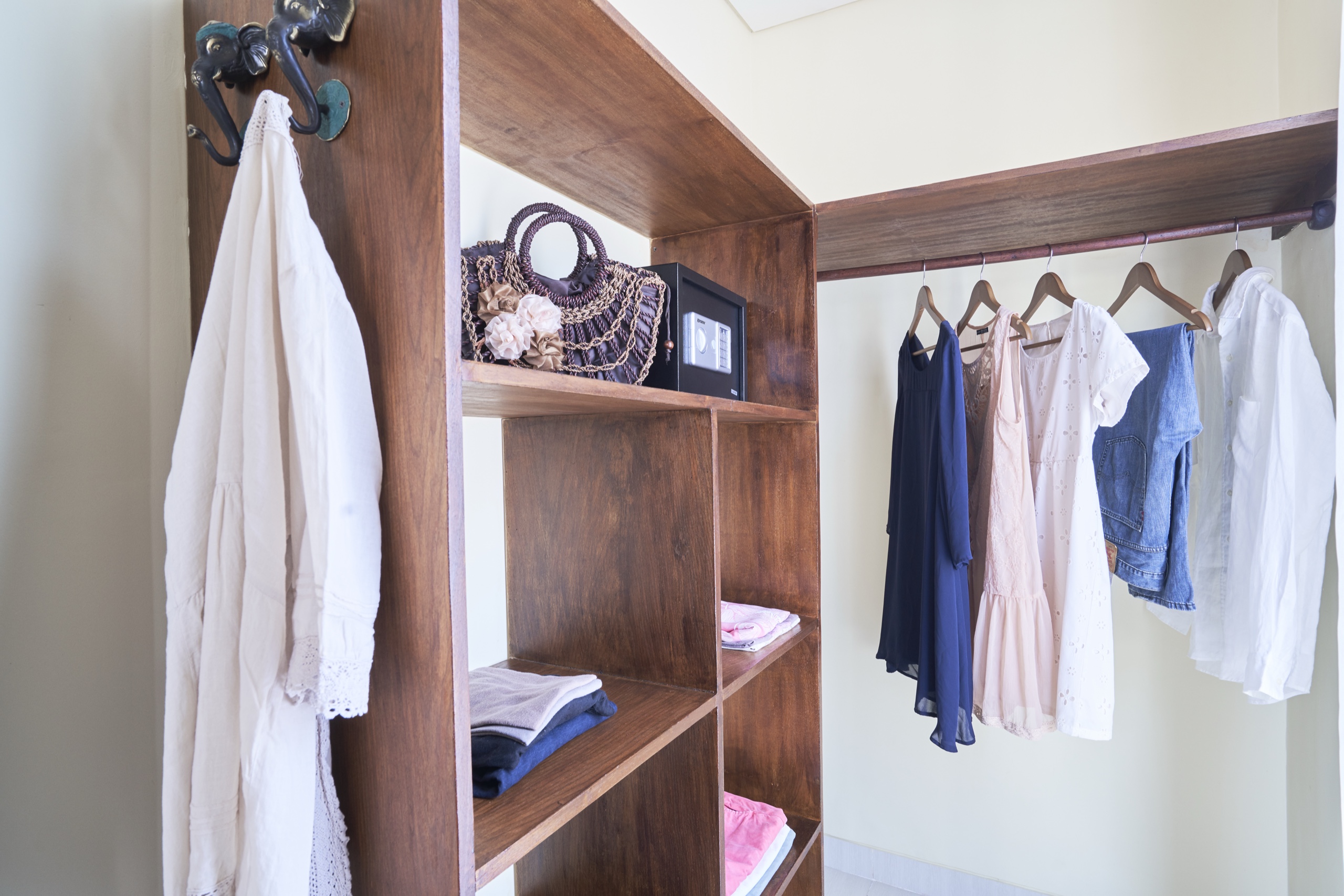
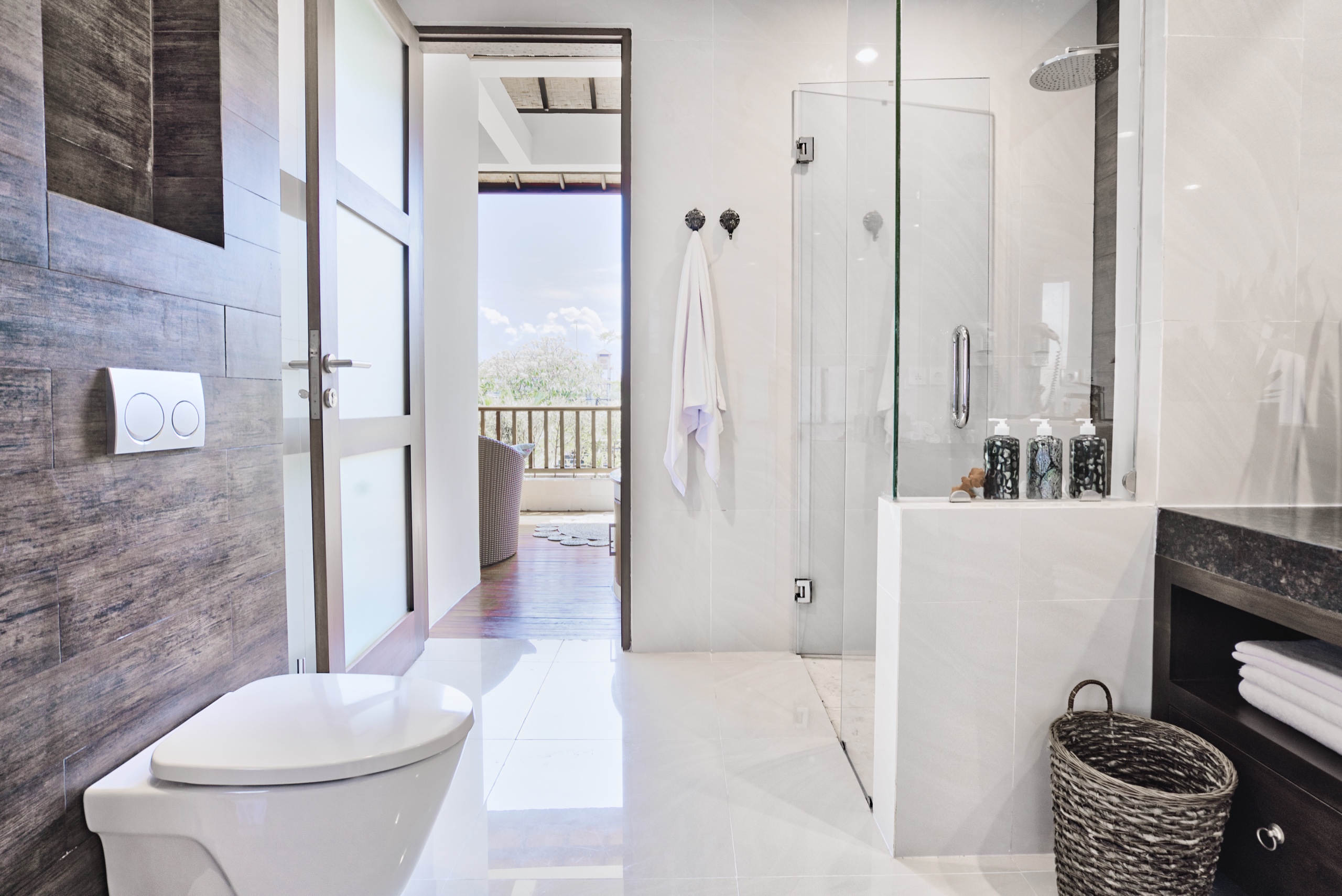
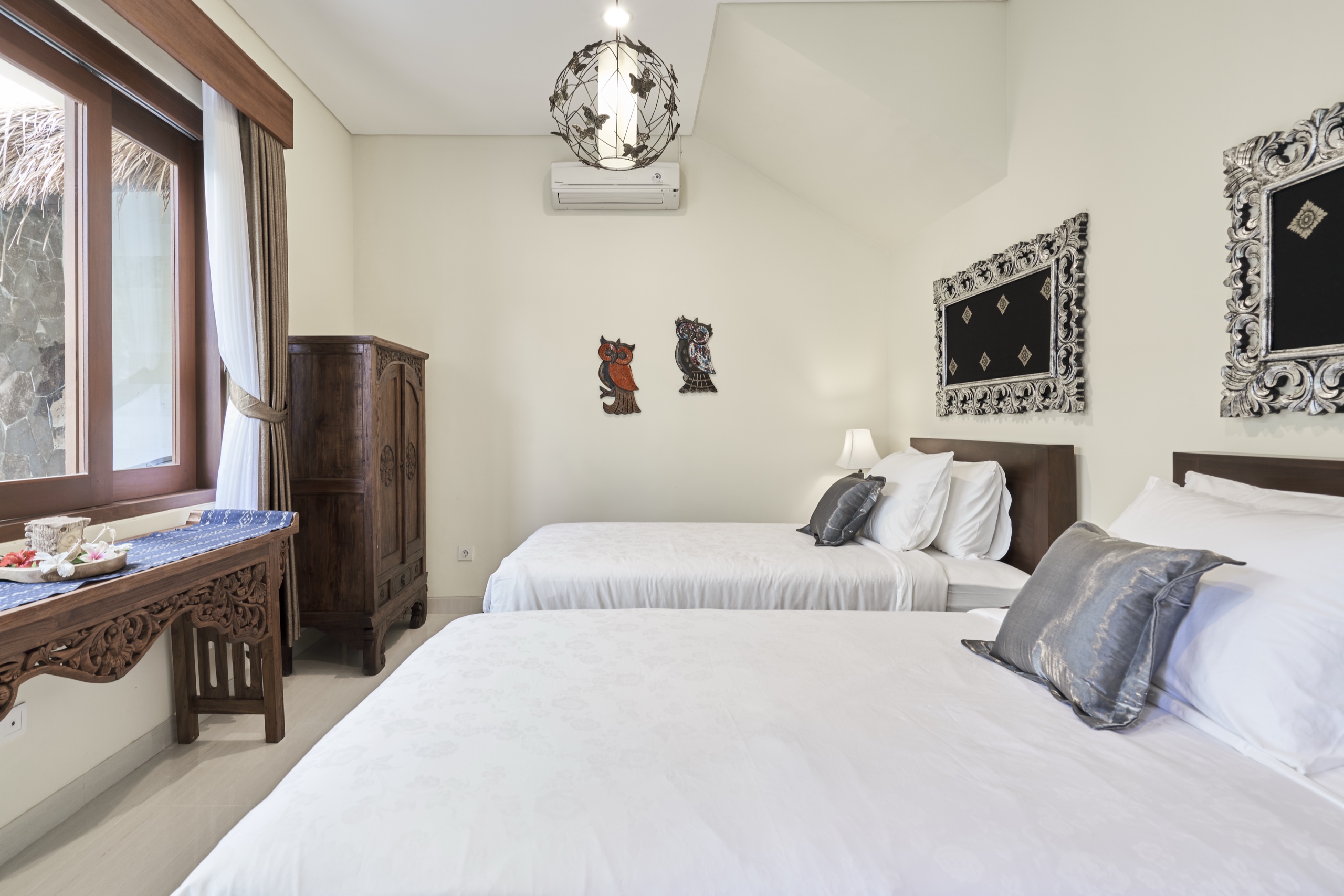
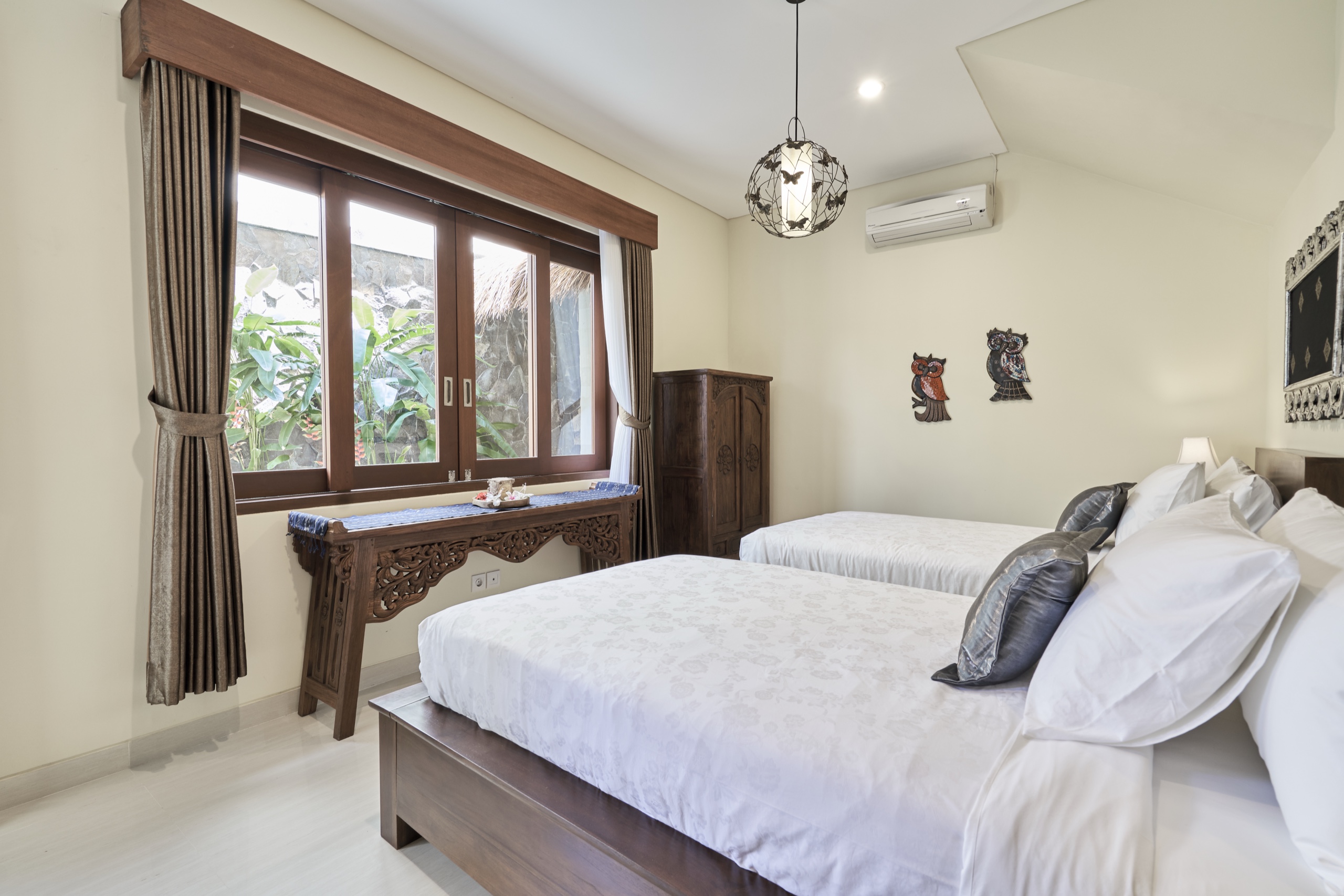
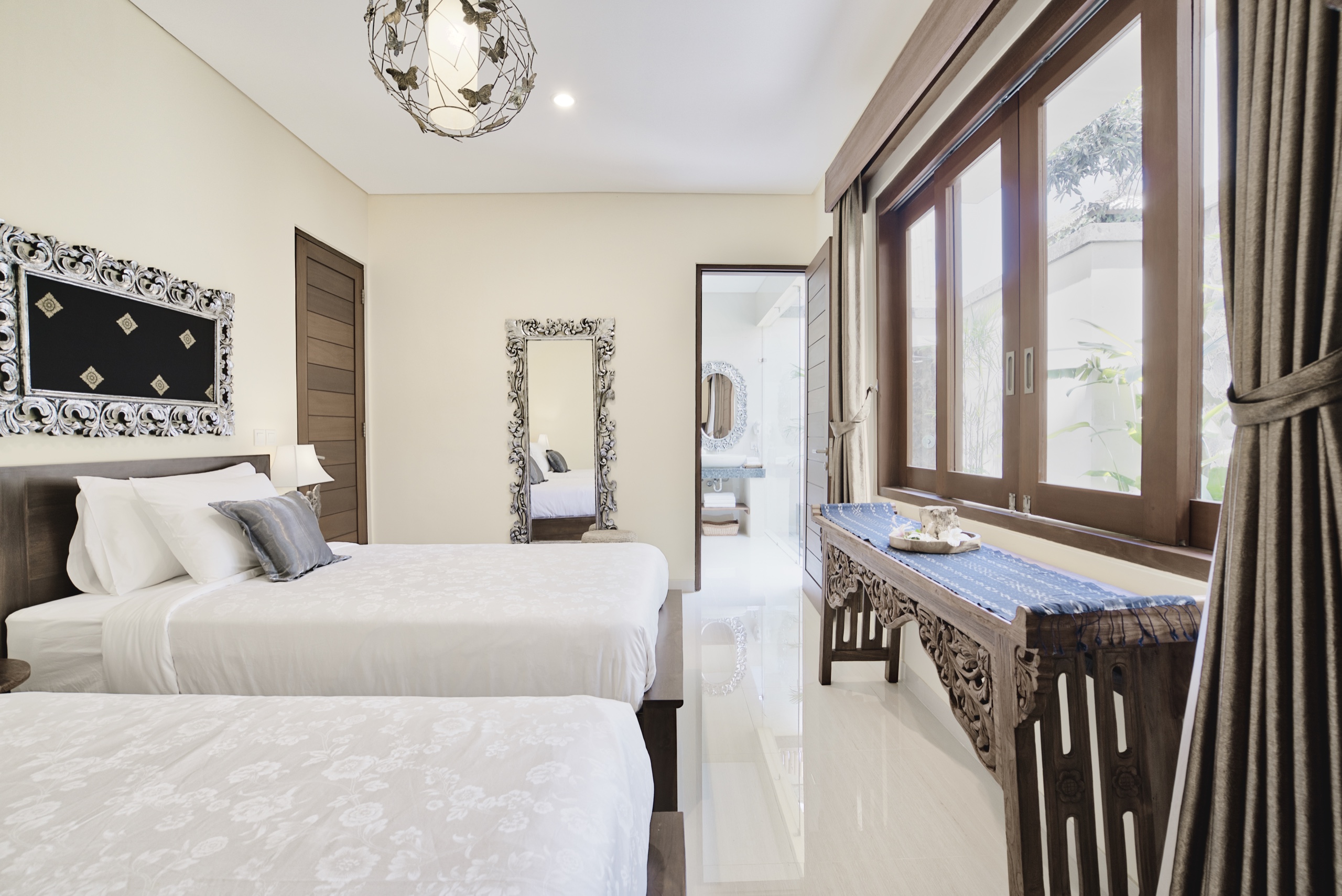
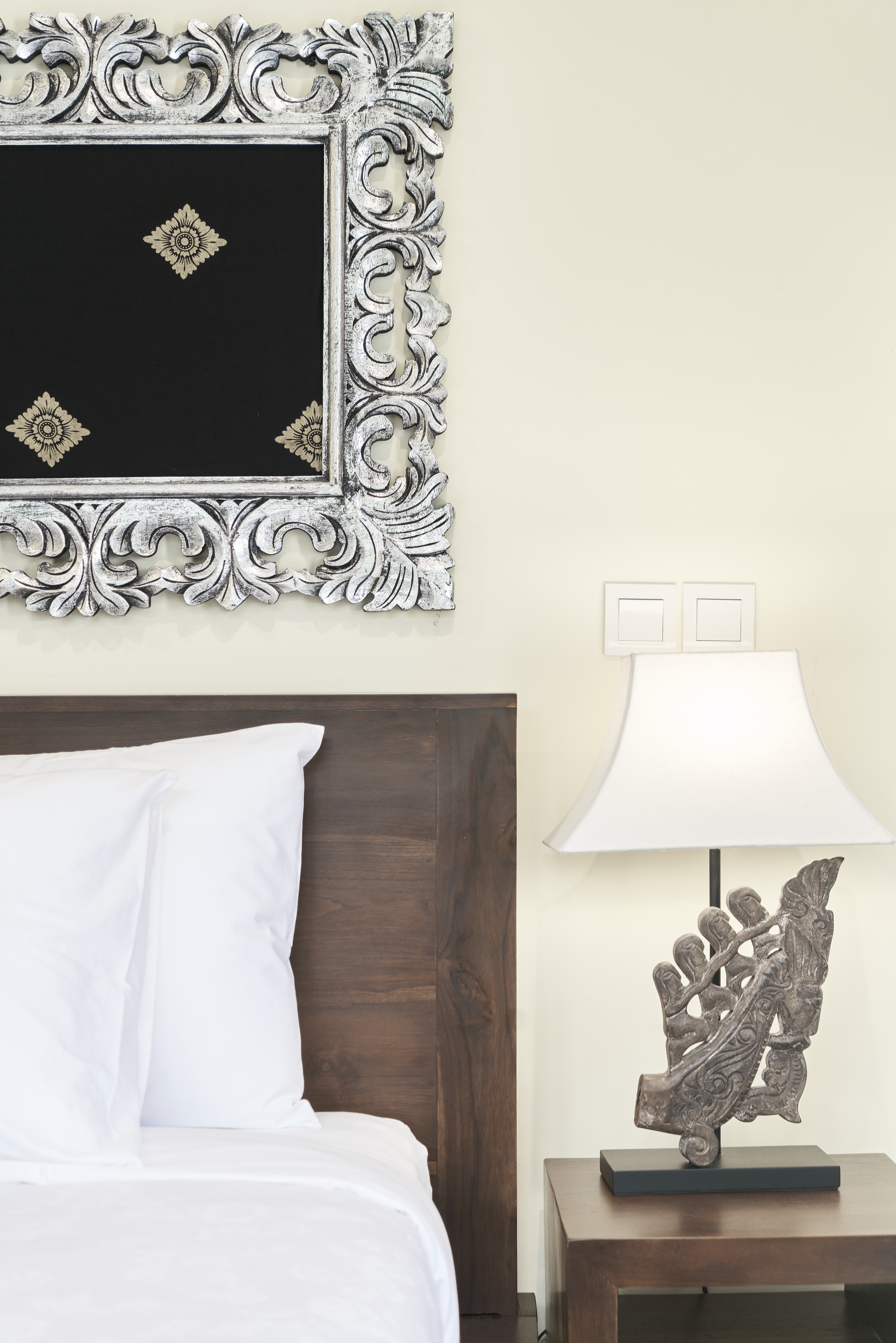
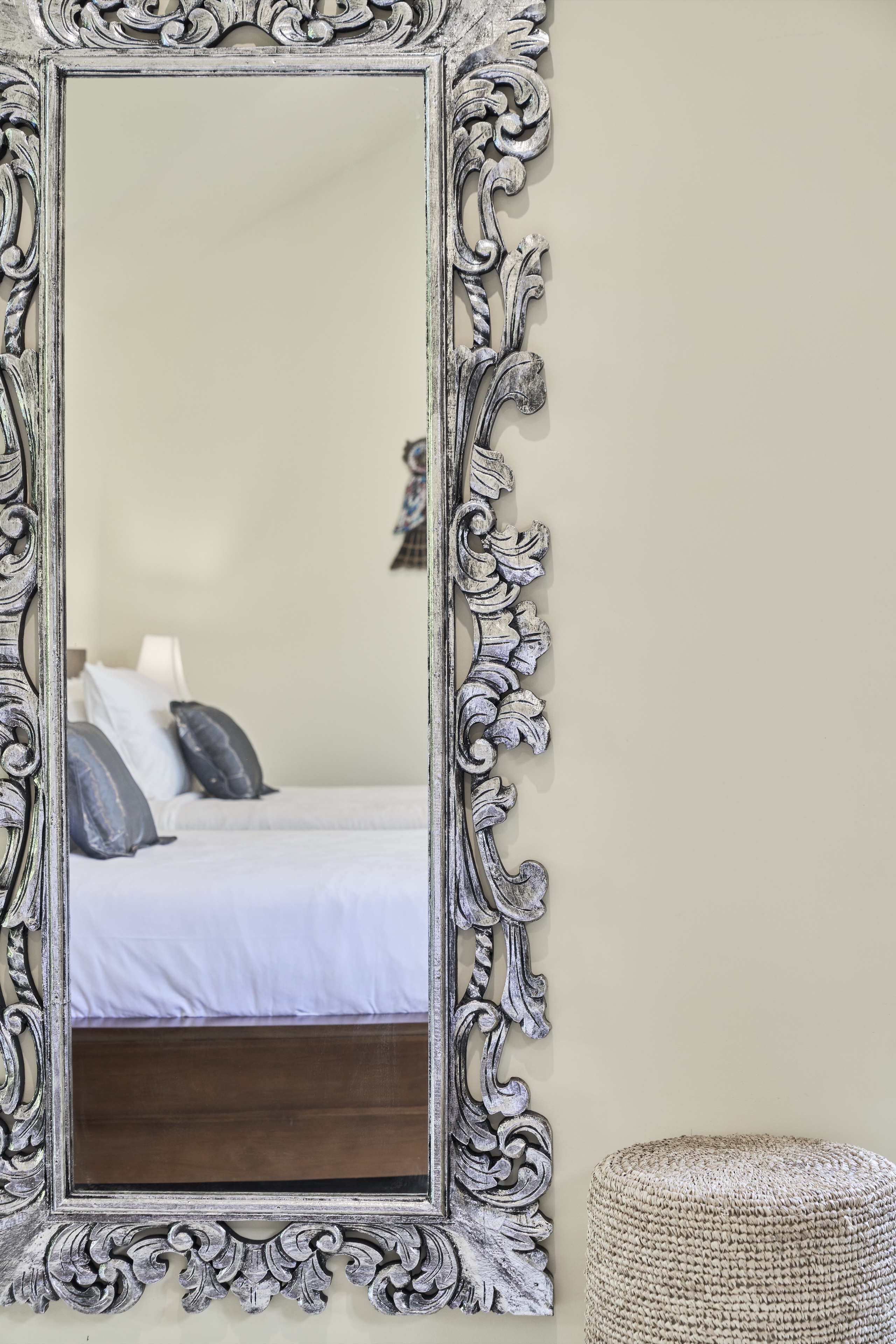
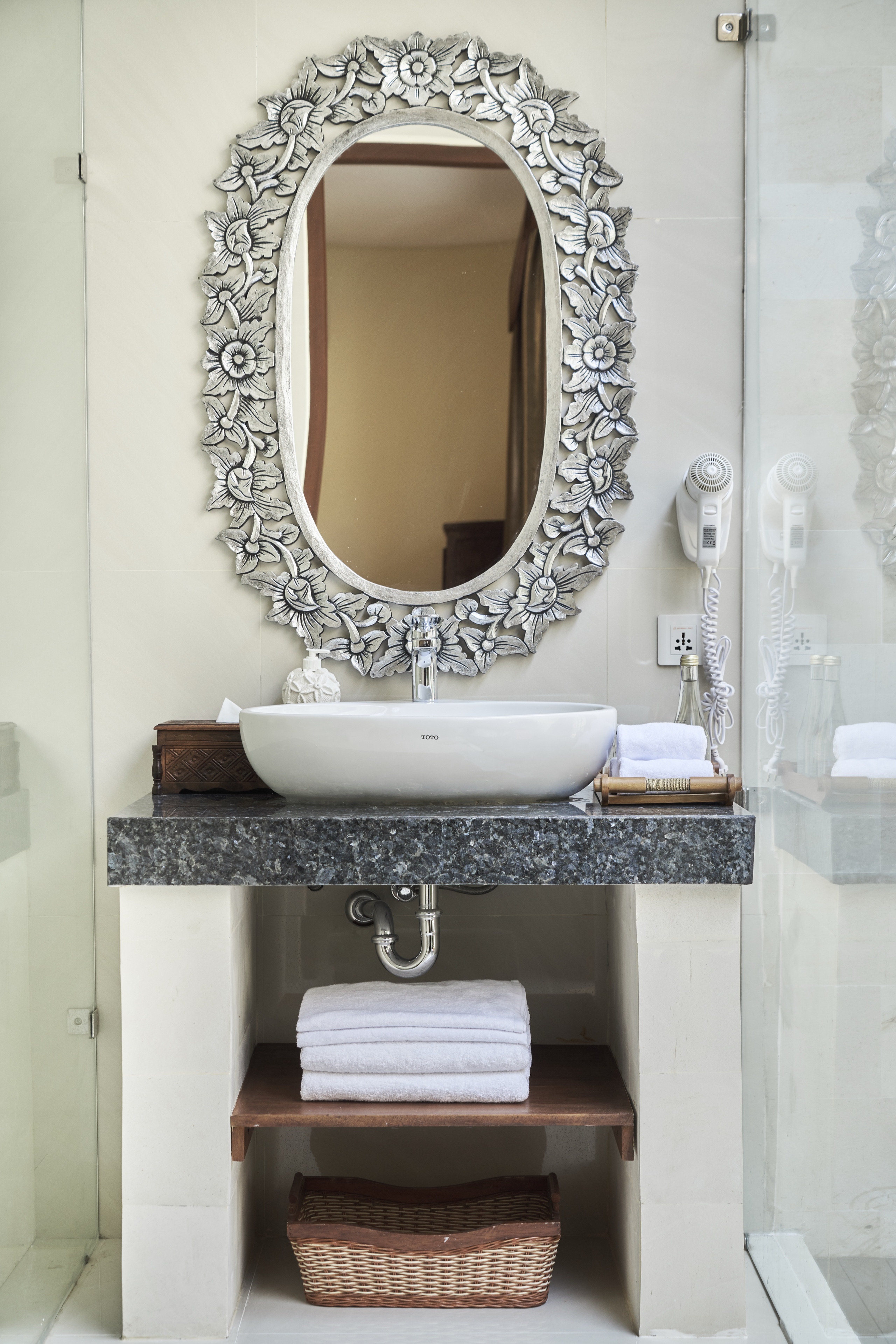
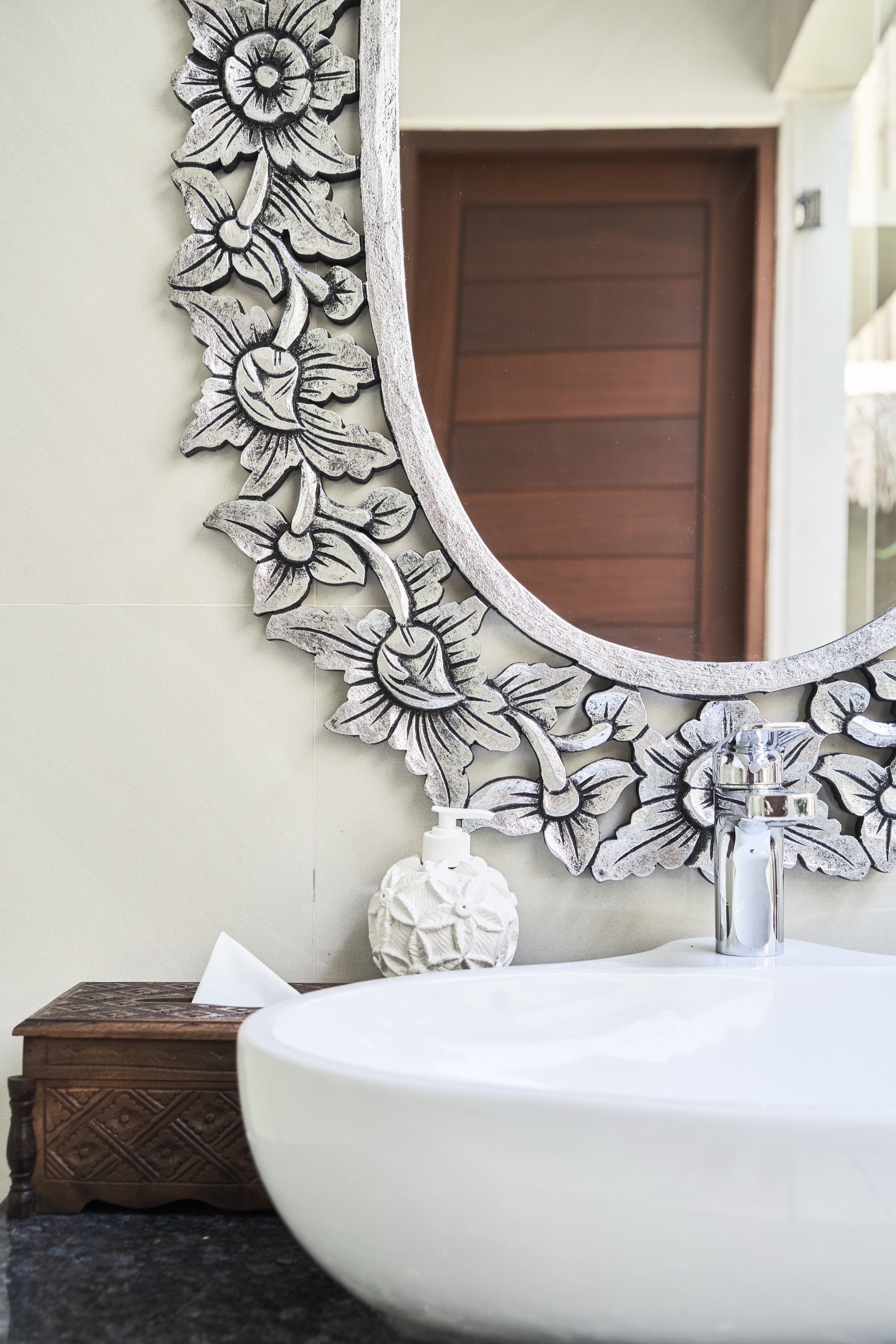
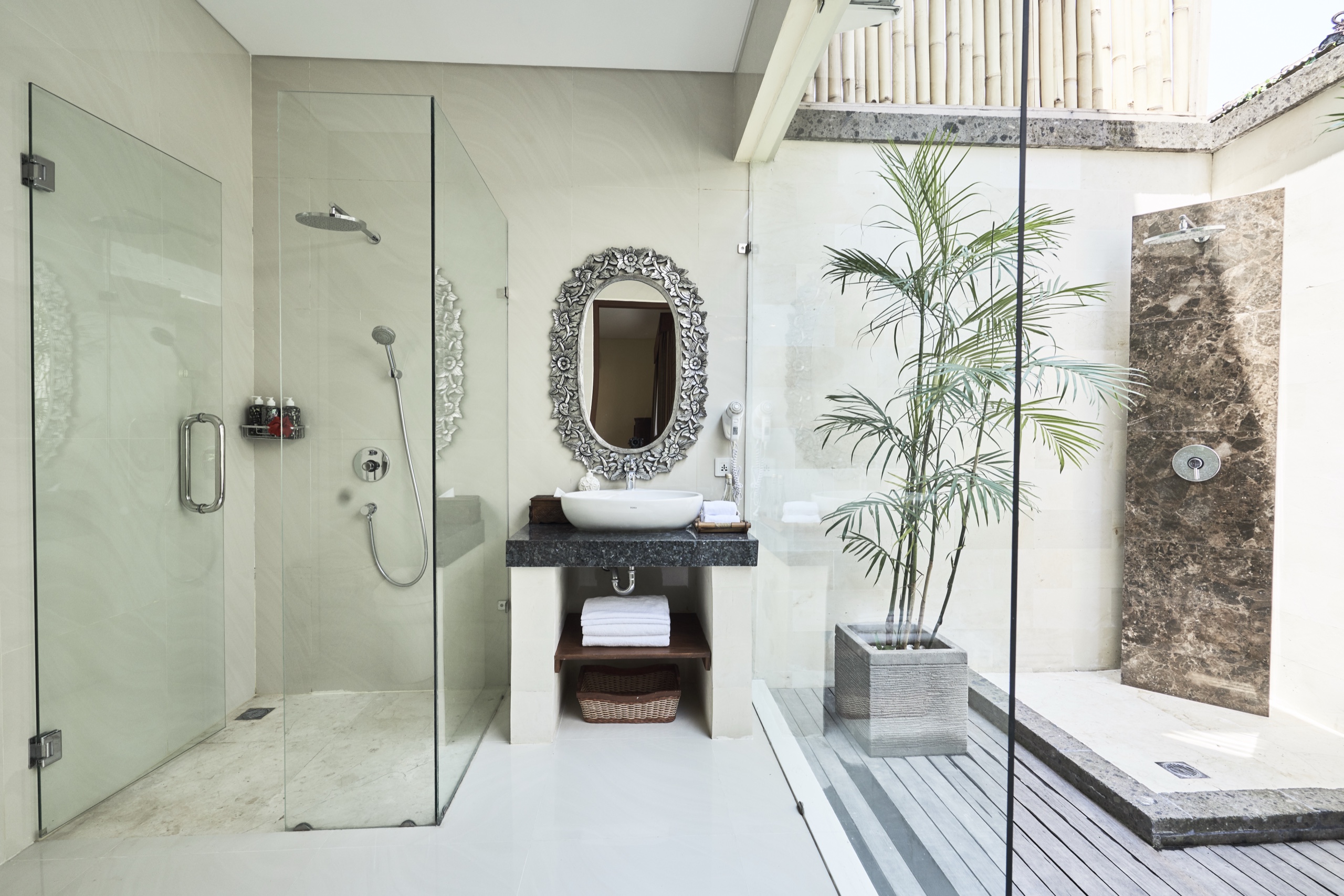
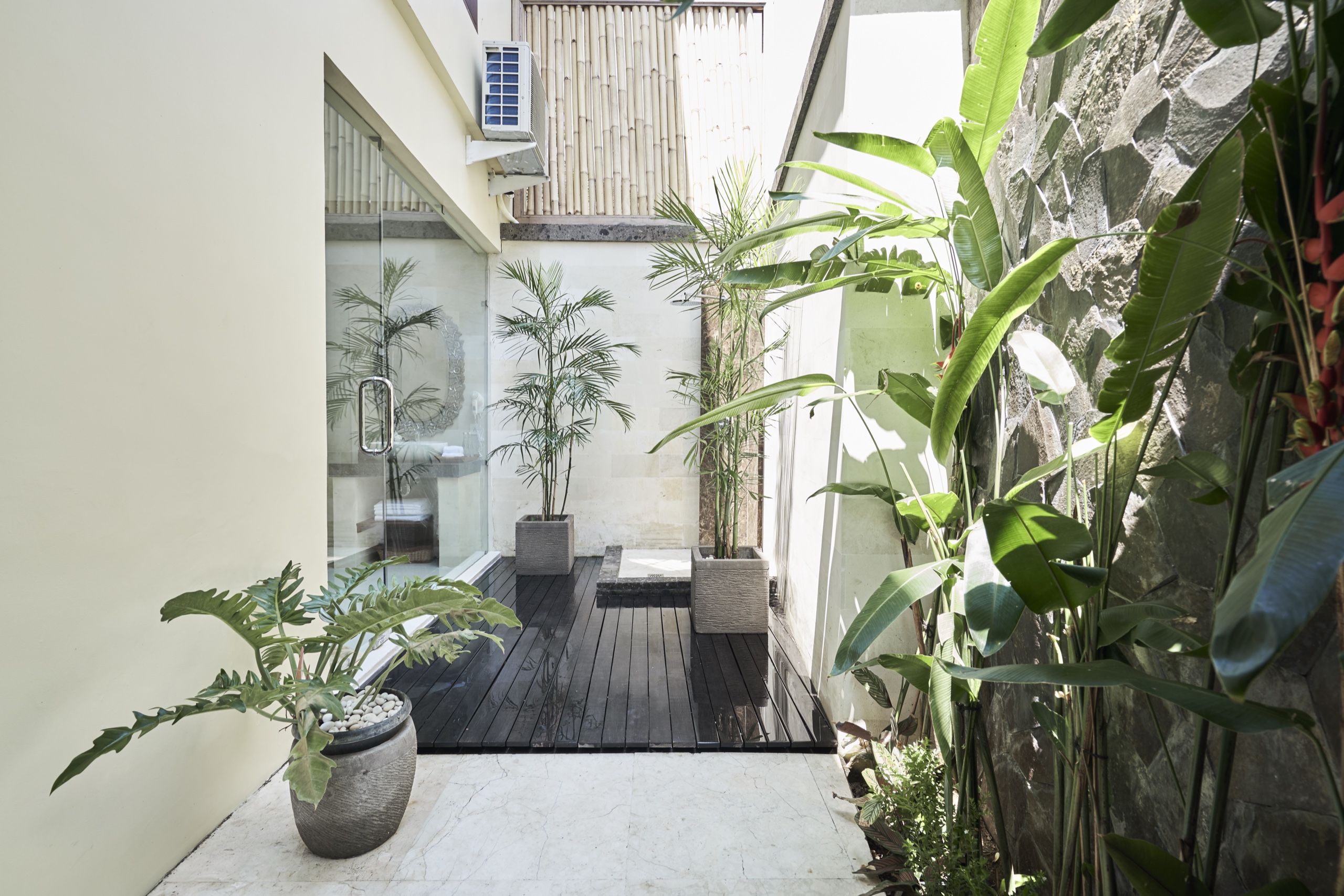
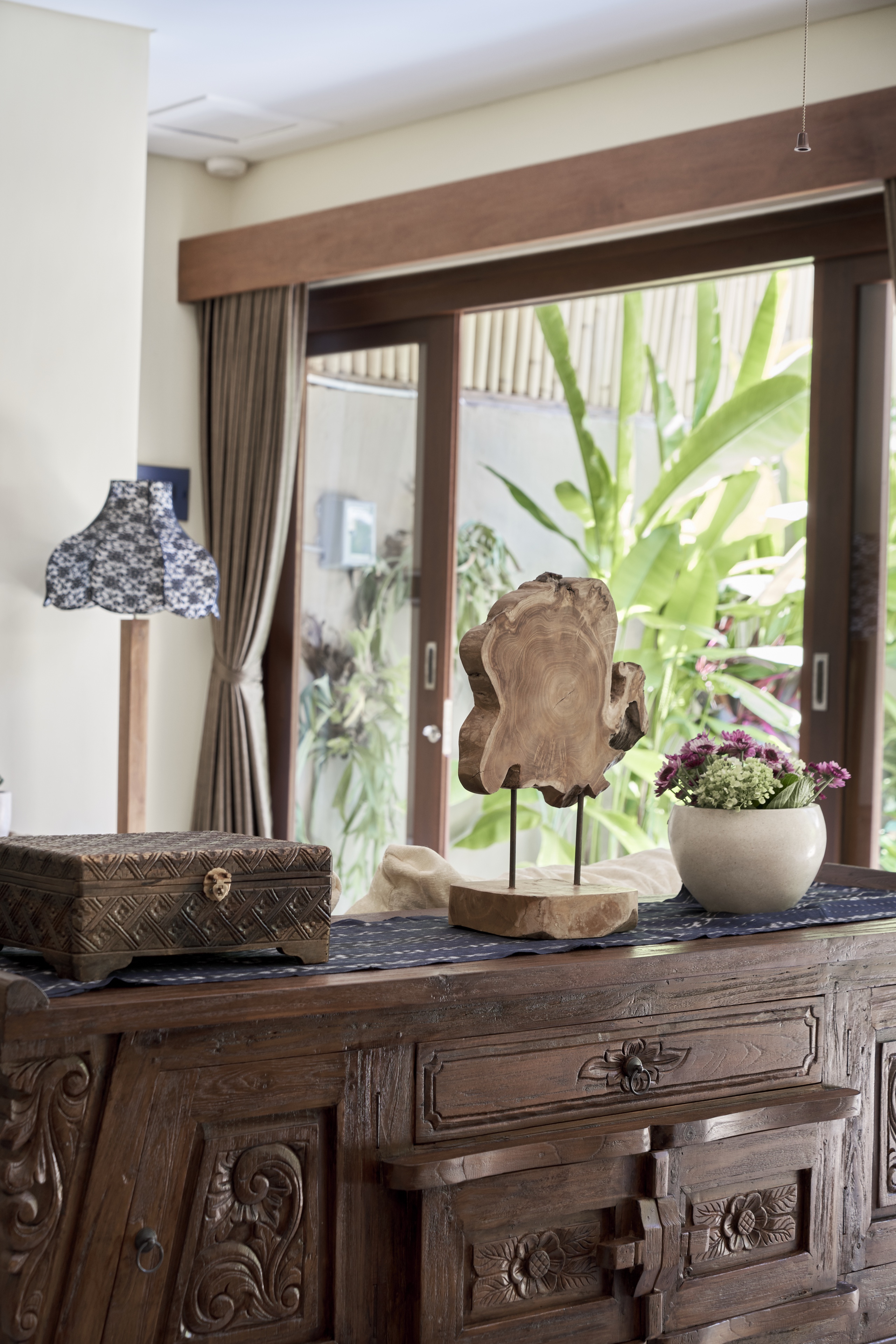
Four people fit properly across two bedrooms, each with its own bathroom, with a walk-in closet off the master. The rooms are furnished in Indonesian teak; there is an outdoor rain shower in the garden as well as one in the main bathroom.
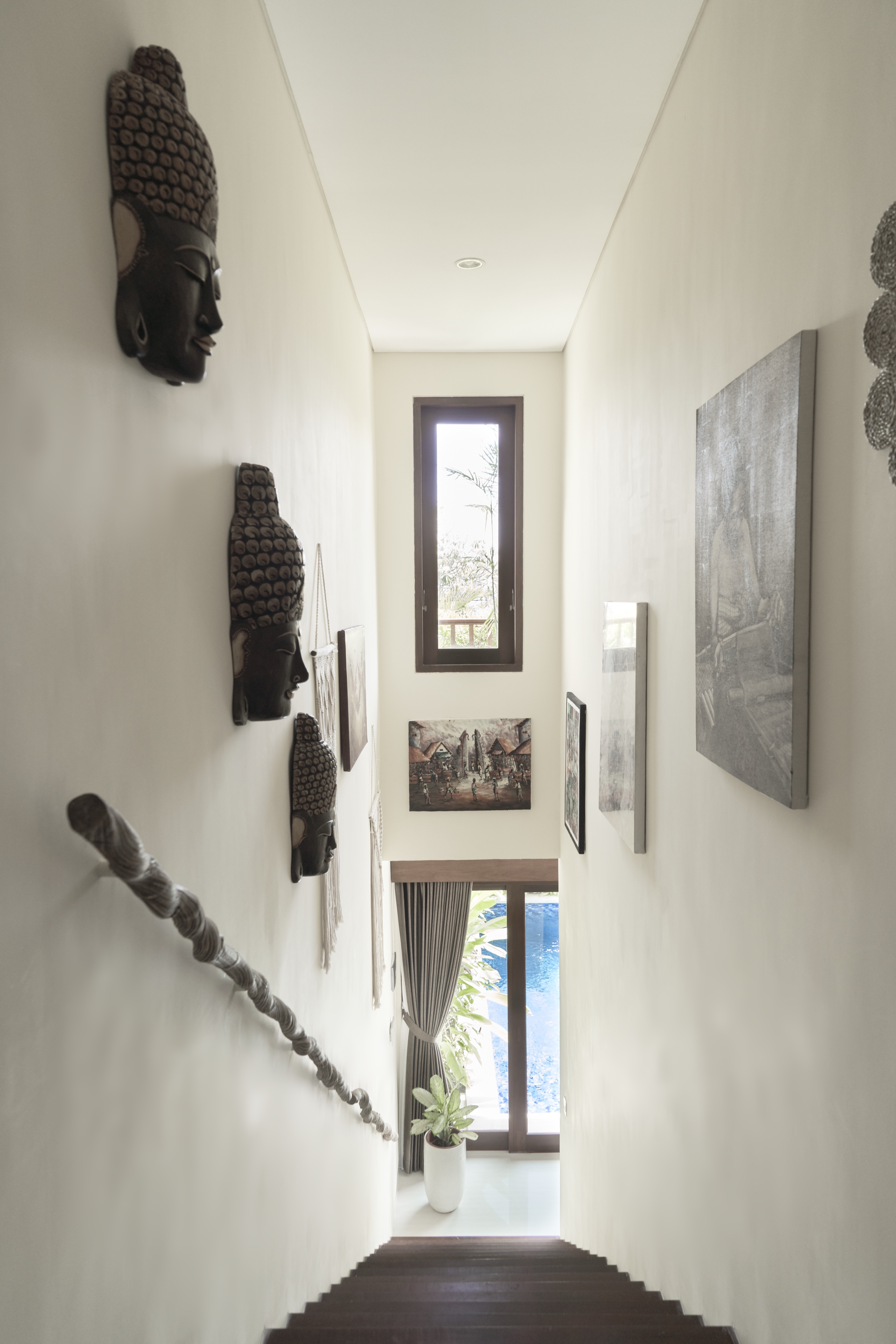
The master bedroom and its jacuzzi are upstairs, reached by an internal staircase. The second bedroom is on the ground floor.
The jacuzzi is very occasionally out of service for maintenance.
The villa faces north.
Sanur runs a few kilometres north to south along the coast, and the villas sit in the middle of it. Jl. Danau Tamblingan — the main street, with the restaurants, spas and shops — is 150 metres away, and the Andaz and the Hyatt are about 200 metres in the other direction.
This is the older, quieter side of southern Bali. Sanur is where the island's tourism began in the 1950s and it has stayed slower than Seminyak or Canggu — wide pavements, trees along the main street, long dinners rather than nightlife. You are a few minutes' walk from all of it, on a residential lane rather than on the street itself.
Bali sits about eight degrees south of the equator, so the midday sun passes close to overhead and every garden gets it. Which way a villa faces makes less difference here than it would further north or south — we list it on each villa anyway, for anyone who wants to know.
Four hundred metres and you are on the sand. The stretch in front of the Hyatt is one of the greener parts of the shore, with loungers to rent and restaurants along the front.
Sanur faces east, which is the reverse of Bali's west-coast beaches: the sun rises over the water here rather than setting into it. And a reef about a kilometre offshore takes the swell before it arrives, so the water inshore stays flat — shallow a long way out, no undertow, and calm enough for children.
The promenade runs roughly five kilometres north to south, car-free and flat the whole way.
This is the question we are asked most often, so: no villa overlooks another, and none of them faces a street. They sit together on a lane in a residential part of central Sanur, walled and screened with planting on every side — you can swim, eat and sleep outdoors without being overlooked.
The same goes for noise. There is no road frontage and no through traffic, so what reaches the garden is the neighbourhood rather than the street.
There is a front office on the property, and you are met and shown around when you arrive rather than sent a door code. If something needs fixing, someone is on site to fix it — which is the part of a villa stay that self check-in quietly removes.
Bicycles are free to borrow, and Sanur is flat, walled with quiet lanes and small enough to cross on one. Housekeeping comes daily.
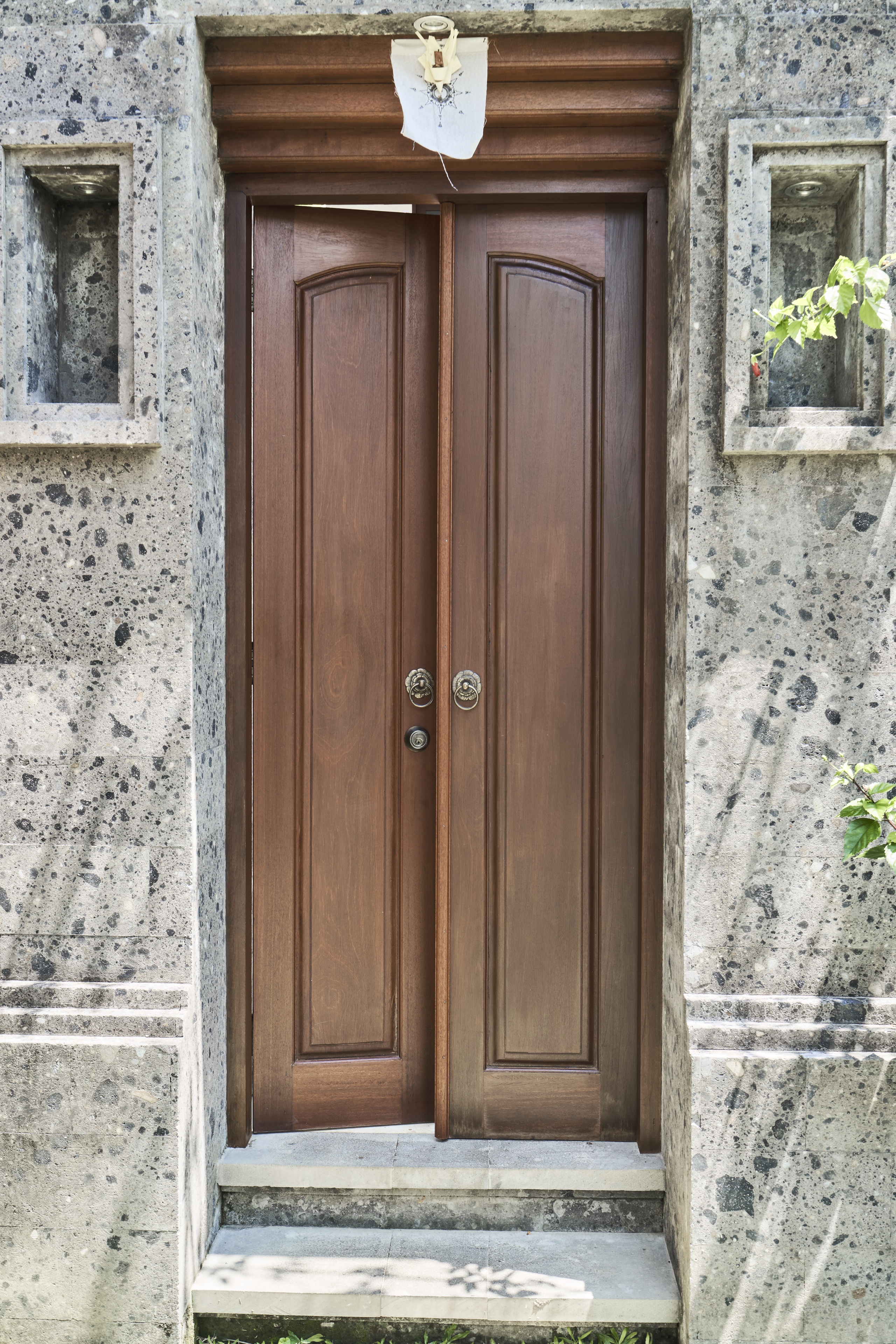
Each villa is entered through its own kori — the gateway that marks the threshold into a Balinese compound. Ours are minimalist rather than ornately carved, built in batu paras.
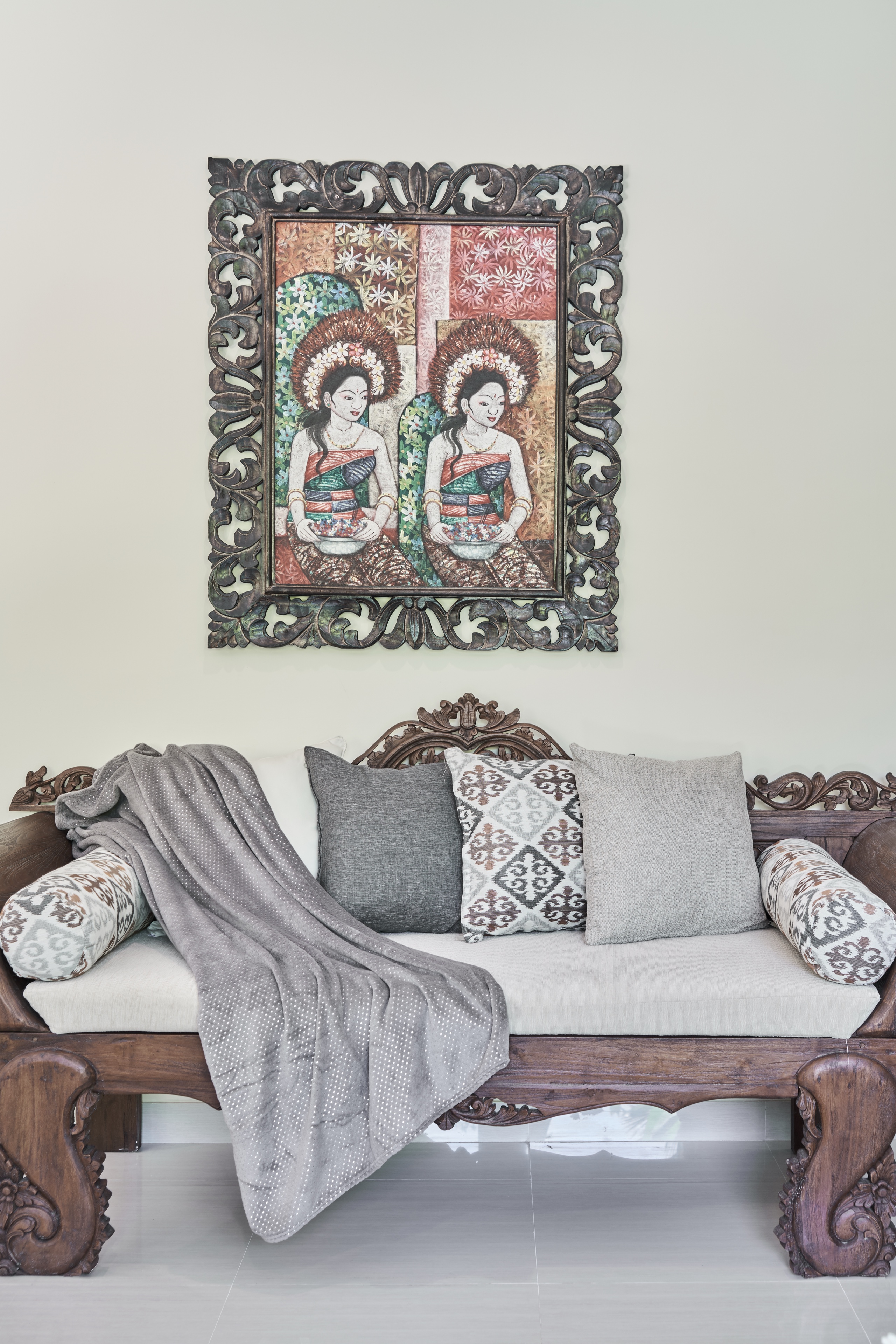
You walk through one to reach your own door, not into a shared lobby. It is a small thing that sets the tone: Balinese houses with modern comforts, rather than modern builds with Balinese decoration.